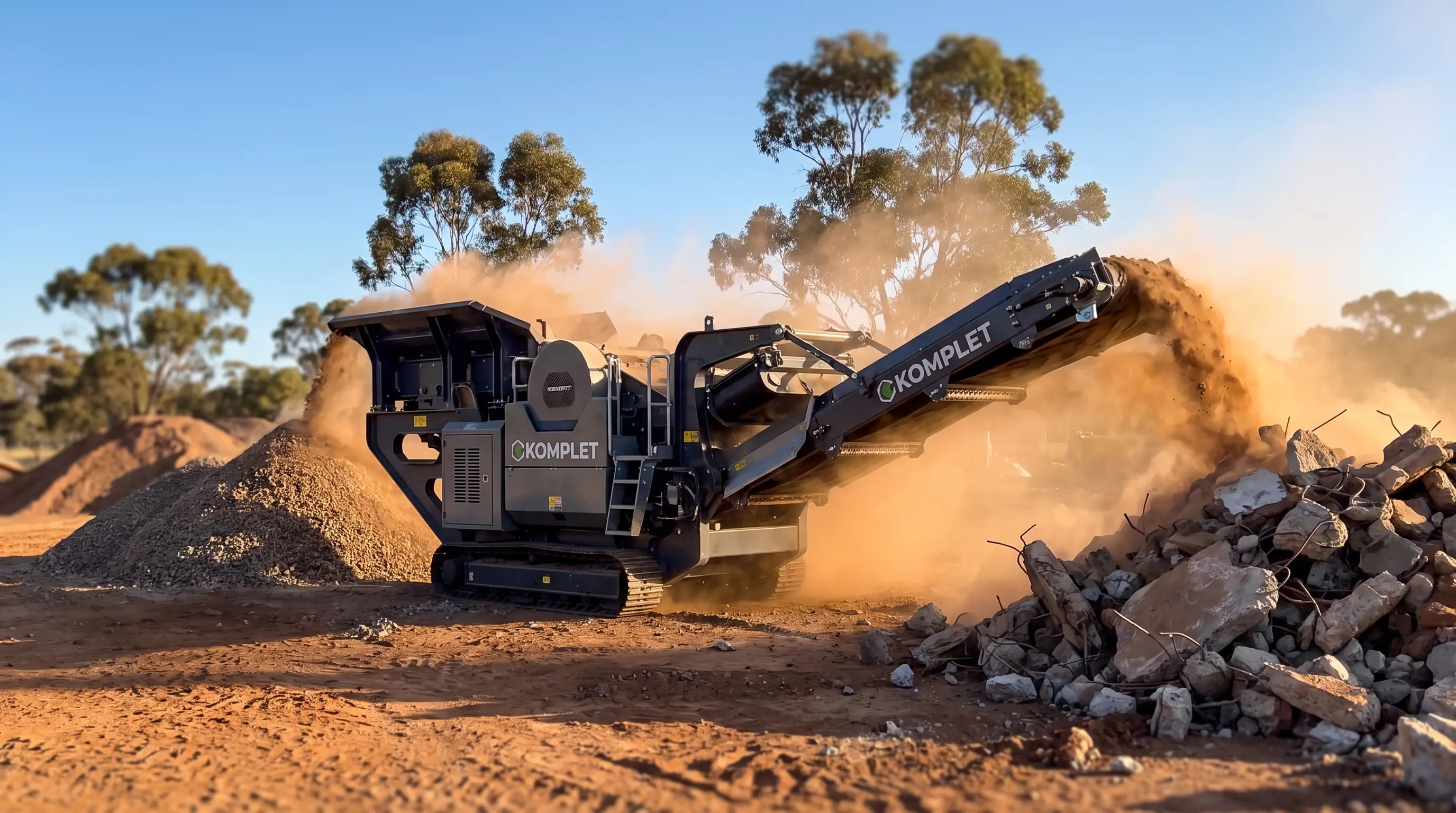
A heap of crushed concrete with no size split on it has one buyer: the tip. The same heap run through a screener becomes road base, drainage aggregate and fines that someone pays you for. A tracked screener is the machine that does that split on your site, and this guide walks through what these machines do, which type suits which material, how to size one to your workload, and what the Komplet Kompatto range offers at each level.
What a tracked screener actually does
A tracked screener is a mobile screening machine that runs on crawler tracks and separates bulk material such as soil, aggregate, concrete, asphalt and demolition waste into size fractions on the job site, with no fixed infrastructure. It crosses rough ground, repositions as the stockpiles move, and takes feed straight off an excavator or loader.
The commercial point is the pile it leaves behind. A screener separates crushed or raw material into clean, sized fractions, so instead of an unsorted heap you make road base, drainage aggregate, sand or topsoil to spec on site. We supply mobile and tracked screeners spanning 30 to 660 tph across the Rubble Master and Komplet ranges, delivered anywhere in Australia.
The three types, and which one your material wants
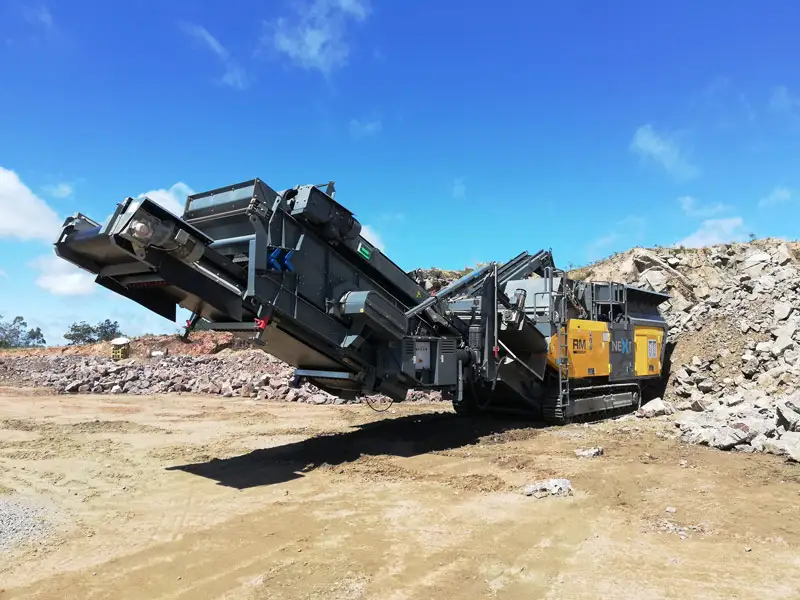
Scalping screen. A scalper is a heavy-duty screen built for coarse material. An eccentric-weight shaft drives the deck at roughly 700 to 1,000 rpm, which keeps material moving across the screen and stops it bridging or clogging. This is the machine for dirty, rocky, awkwardly shaped feed: demolition rubble, ripped rock, gravel with a lot of clay or fines. Run one ahead of a crusher and it takes out everything that does not need crushing, which lifts plant capacity, cuts liner wear and drops fuel use; on fines-heavy feed it pays for itself quickly.
Incline screen. An incline screen gives a sharper cut for finished, saleable sizes. It suits sand, gravel and aggregate work where the goal is precise sizing, and typically runs two or three decks producing three or four finished products.
Trommel screen. A trommel is a rotating perforated drum that generally makes two fractions. It earns its place on organics recycling and composting work. Trommels are used in aggregate processing as well, but the screening ranges we supply are the Rubble Master scalping and incline screens and the Komplet Kompatto range.
Decks decide how many products you make
Decks are products. One deck gives a two-way split, oversize and undersize. Two decks give a three-way split: oversize, a mid product and fines. Add a third deck when you need four fractions. Match the deck count to the number of saleable sizes you actually sell.
The Komplet Kompatto 5030 removes some of that commitment: it switches between a three-way and a two-way split on hydraulics, so one machine covers both jobs without a rebuild.
Size the machine to your month, not your peak hour
Start from the product you sell and the volume you move, then match the screenbox and throughput to your daily target. A bigger screenbox moves more tonnes, and the old rule of thumb still holds: screen width sets capacity, screen length sets precision.
Run the arithmetic on your own numbers. If you sell 30,000 tonnes a month and screen three days a week at eight hours a day, that is 96 hours of processing, so you need an average of about 312 tph out of the machine.
Then discount the brochure figure for your material. Komplet’s own contractor guide puts a number on it: a scalper rated at 150 tph on dry aggregate may do half that on wet construction and demolition debris. Tell whoever is speccing the machine exactly what you are feeding it, moisture included, because it drives every other decision.
The Komplet Kompatto range, model by model
The Kompatto range covers three working sizes, from tight urban sites up to high-volume plants, and the two smaller models fold into a shipping container for transport.
Kompatto 221. The entry point. An 18.5 kW (25 hp) power pack drives a 2,100 by 1,085 mm screenbox rated up to 30 tph. At 3,300 kg it folds into a 20 ft container, is built for tight urban sites and smaller contractor operations, and suits the output of a compact jaw such as the K-JC 503 or K-JC 704.
Kompatto 104. The high-capacity folding screener. A 35 kW (45 hp) power pack drives a 3,015 by 1,240 mm screenbox rated up to 200 tph. At 8,000 kg it tows on a standard trailer and folds down into a 40 ft container, so it ships and relocates without oversize permits.
Kompatto 5030. The highest-capacity Kompatto. A 35 kW (45 hp) power pack drives a heavy-duty incline screenbox with a 2,450 by 970 mm top deck, rated up to 250 tph (280 US tph), producing three spec-sized products in a single pass. The hydraulic two-way/three-way switch adds flexibility.
Beyond Kompatto, we also supply Rubble Master scalping and incline screens for soils, aggregates and mining work, specced to the same material and volume logic. See the full screening range we carry for what is in stock.
Fitting the screen into the rest of the circuit
A screener rarely works alone. The crusher turns concrete, rock and construction waste into product; the screener grades that product into clean, sized fractions. Our crusher range spans 30 to 450 tph, so the pairing can be matched across the whole span.
Downstream, a stacking conveyor keeps the plant feeding. The Komplet K-TC 460 is a compact tracked stacker for tight sites that builds a clean pile to 4,600 mm; the EzyStak R6536TR is a tracked radial stockpiler with a 65 ft belt for large stockpiles and loadout.
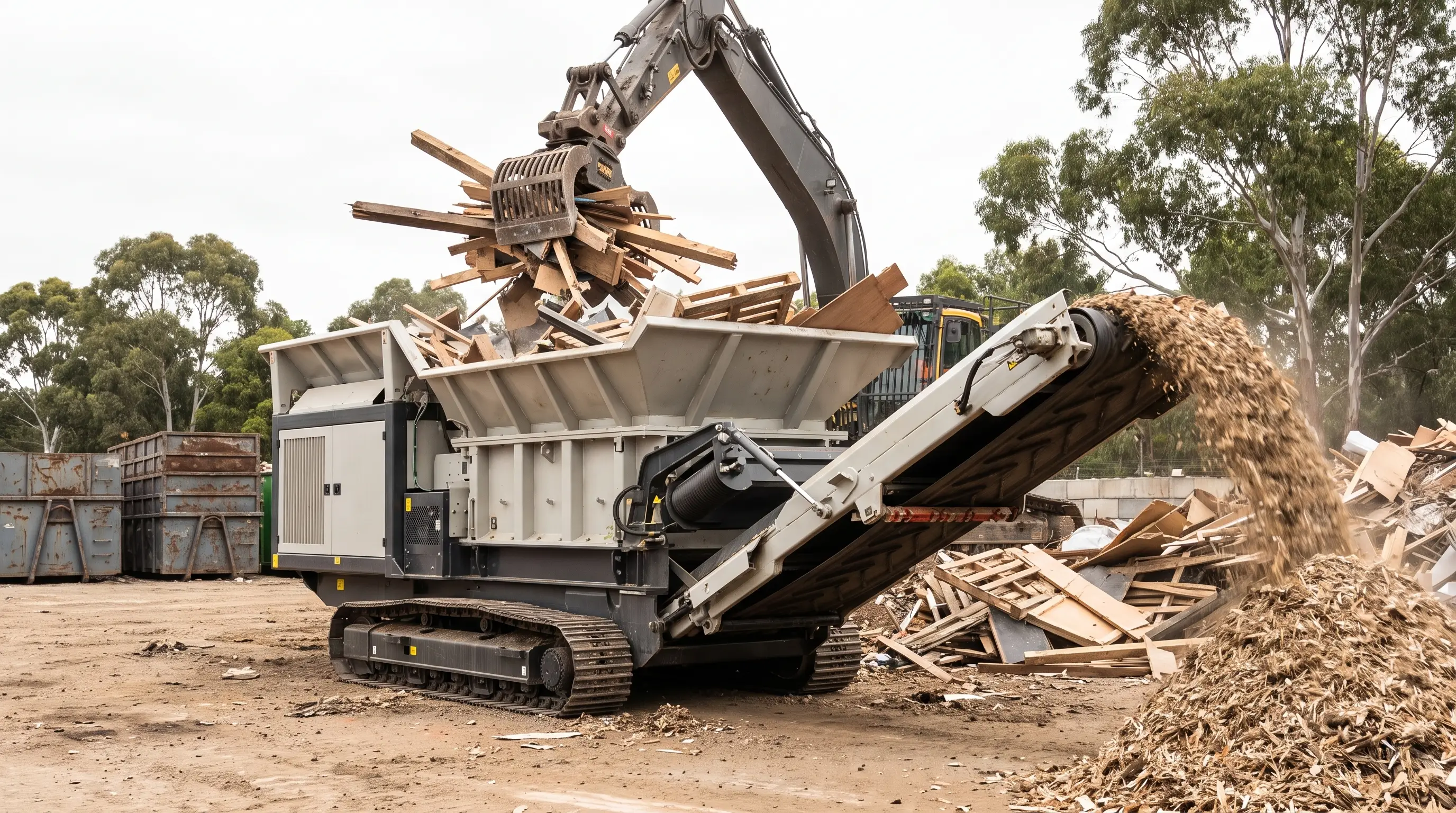
One boundary worth knowing: if the material is bulky timber, pallets or mixed waste that only needs its volume cut for cheaper haulage, that is a shredding job, not a screening one. For that work we supply the Komplet Krokodile, rated to 150 tph on construction waste and running a 1,500 mm shaft at 160,000 Nm of torque.
Buy or hire
If you screen regularly, owning pays for itself and keeps a machine on hand. For one-off jobs, seasonal peaks or a project that does not warrant a purchase, hire is the answer, and screener hire runs Australia-wide. Screener hire with the machine matched to your site is arranged the same way as a sale: you give us the material, the throughput and the site conditions, and we spec from there.
Where to buy, and what to check
We are Australia’s leading dealer for Rubble Master, Komplet, EzyStak and Cayvol, so a new Kompatto arrives factory-backed with local parts and support, commissioned and backed by wear parts and in-field service. The business is Australian owned and run from Glenorie in Sydney’s north-west, and you deal directly with the people who own it.
The used market exists, but check which market you are buying in. Many used screeners advertised online are overseas listings priced in US dollars, and those prices do not include freight to Australia or local support.
Whatever route you take, the checklist is the same five lines: your material and its moisture, your tonnes per day, the number of products you sell, the feed size coming off the demolition or the pit, and how often the machine will actually run. Bring those five answers to a quick call and the right screener picks itself.