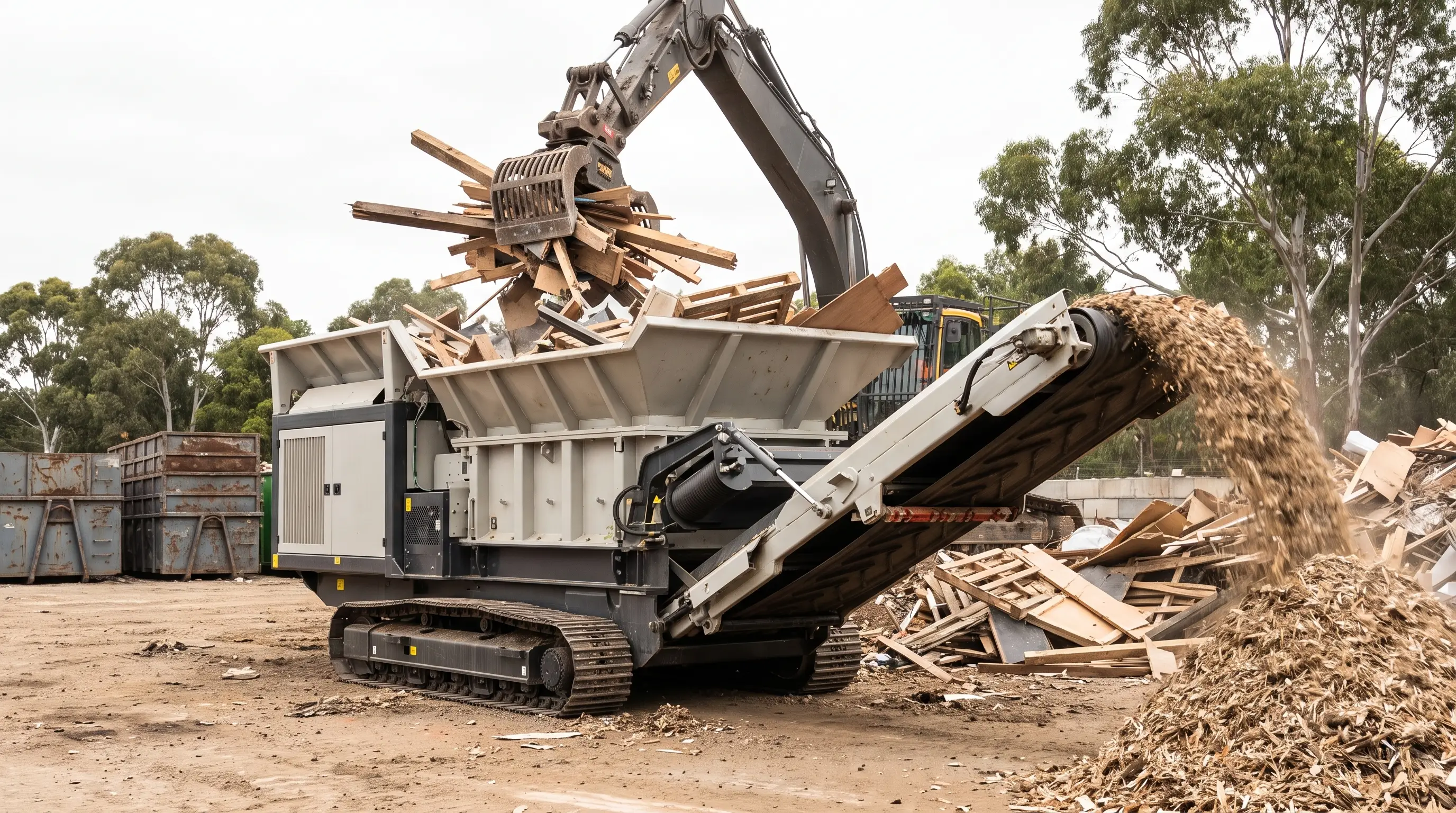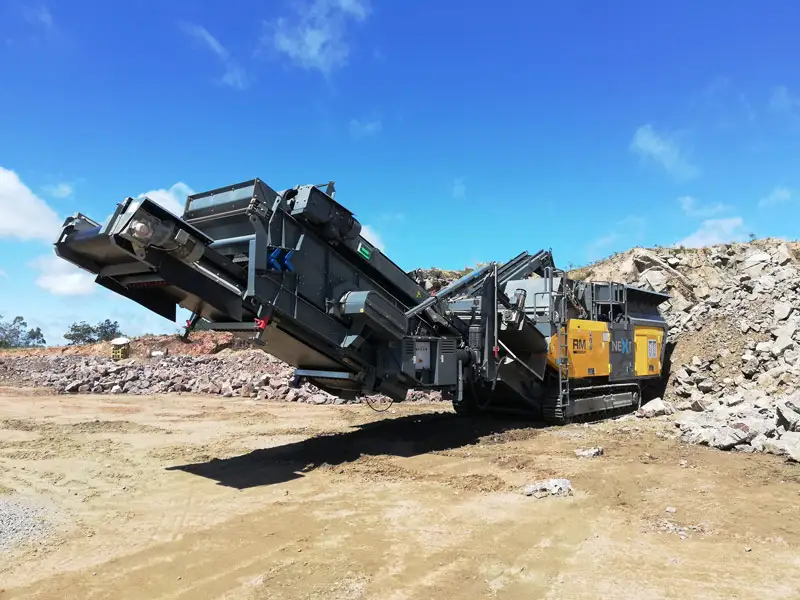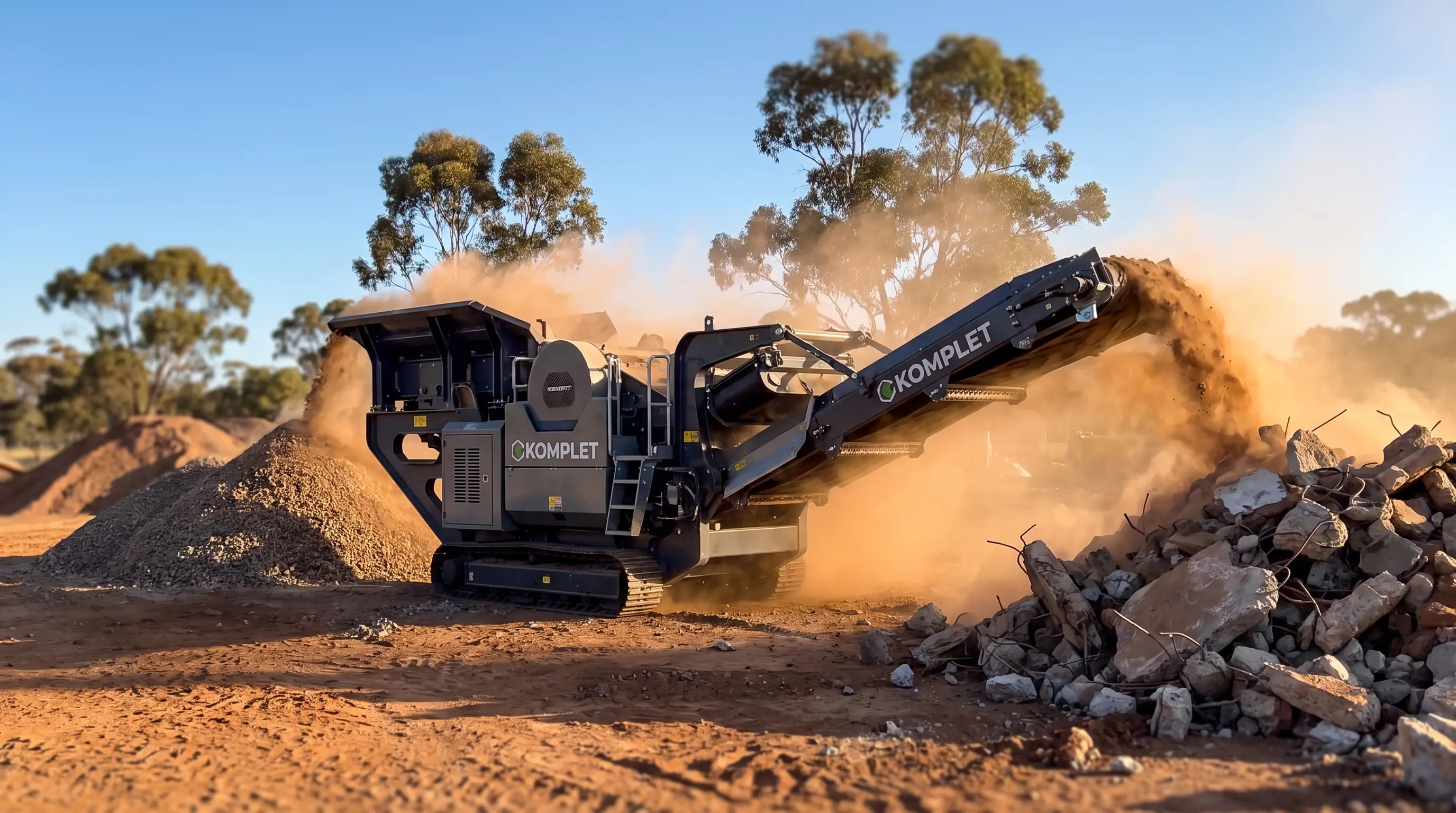
You ring around for a rock crusher day rate and every supplier answers with questions. Where is the site, how long do you need it, what are you crushing. Nobody hands over a flat number, and that is not a sales tactic. The price of crusher hire is built around your job, not a daily sticker, and the real saving is rarely the machine rate. It is what you stop spending on trucks, tipping fees and bought aggregate.
Quick answer: Rock crusher hire in Australia is quoted per job, not per day. Dry hire for a jaw crusher runs $900 to $1,650 a day depending on size; operated hire runs $1,200 to $2,100 a day. Transport, fuel, labour and wear parts sit on top of that.
Why nobody quotes a daily rate for rock crusher hire
Crusher hire is quoted per job because the cost is driven by the machine size, how long you need it, whether it runs operated or dry, the float distance to your site, and how hard and abrasive your material is. Those variables interact, so a single day rate would be misleading the moment one of them moves.
Six factors set the number. Machine size and throughput. How long you need it. Operated or dry. Getting it there. Material and wear. Volume and access. A tracked jaw fed abrasive granite wears jaws faster than an impactor chewing through clean concrete, so the wear line in one quote looks nothing like the other.
Send your material type, rough volume and site postcode in the first call and the number comes back cleaner. The float distance alone moves the quote before the machine even starts.
What Australian contractors actually pay
Jaw crusher dry hire in Australia spans $900 to $1,650 a day across the classes. Operated hire, where the supplier provides a skilled operator, spans $1,200 to $2,100 a day. The spread maps directly to machine size and output.
| Crusher class | Throughput | Dry hire | Operated |
|---|---|---|---|
| Single toggle jaw | 50-100 tph | $900-$1,100 | $1,200-$1,400 |
| Mobile jaw | 100-250 tph | $1,200-$1,450 | $1,600-$1,900 |
| Tracked jaw | 150-300 tph | $1,400-$1,650 | $1,800-$2,100 |
Those are machine rates only. The ancillary costs of crusher hire land on top: transport runs $1,000 to $3,000 each way depending on float distance, fuel $30 to $50 per hour while the machine runs, labour $50 to $100 per hour if you run it operated, and wear parts $500 to $1,000 per week covering jaws, liners and belts.
The labour line is the easiest one to misprice. Dry hire looks cheaper until you account for a skilled operator, which is where the $50 to $100 an hour goes.
Jaw or impact: matching the machine to the material
The first decision is crusher type, and it follows the material, not the other way around. Jaw crushers, the Komplet K-JC range and the RM J110X, are best for hard, abrasive rock and primary reduction where you want a controlled top size. Impact crushers, the RM 70GO!, 90X, 100X and 120X, shine on concrete, asphalt and construction waste. They produce a cubical, well-graded product and liberate rebar cleanly.
Here is the hire fleet in numbers:
| Machine | Type | Capacity |
|---|---|---|
| Komplet K-JC 704 | Jaw | up to 80 tph |
| Komplet K-JC 805 | Jaw | up to 140 tph |
| RM 70GO! | Impact | up to 150 tph |
| RM 90X | Impact | up to 200 tph |
| RM 100X | Impact | up to 250 tph |
| RM 120X | Impact | up to 350 tph |
| RM J110X | Jaw | up to 450 tph |
The Komplet compact jaws are the tight-access option: the K-JC 704 is rated up to 80 tph and the K-JC 805 up to 140 tph, both small enough to work where a full-size crusher cannot be floated in. The Rubble Master impactors top out at 350 tph on the RM 120X, and the RM J110X jaw reaches up to 450 tph.
Match throughput to the job rather than paying for headroom you will not use. A small site or a short job sits at the compact end, 30 to 80 tph. Recycling yards and civil jobs usually land in the 140 to 250 tph impactor band. Quarry and large recycling work is where the 350 to 450 tph machines earn their float cost. A back-lane knock-down in Sydney wants a K-JC 704, not a 450 tph jaw idling at a quarter load.
The economics that matter: crush on site or haul and buy
The machine rate is the small number. The big one is the material itself. Every load of demolition debris you send to landfill costs you twice, once in trucking and tipping fees to get rid of it, and again when you buy and haul in fresh base, fill or road stone to replace it.
Crushing on site removes both legs. A hired mobile crusher turns demolition concrete, quarried rock, reclaimed brick and mixed construction waste into a saleable, reusable product on your own hardstand. You stop paying to cart the rubble away and you stop paying to buy aggregate back. That two-sided saving, not the day rate, is where crusher hire pays for itself.
This is why quoting per job matters. A fixed day rate hides the haul-and-buy saving entirely, because it prices the machine in isolation from the material it is about to make free.
Hire or buy: the three usage bands
Hire wins for most contractors because ownership only makes sense past a certain number of hours a year. The breakpoints are concrete.
Light use, fewer than 4 weeks a year, two rental weeks at $3,000 per week plus $2,000 for delivery and pickup, puts annual cost around $8,000. Medium use, 5 to 12 weeks a year, eight rental weeks at $3,000 per week plus $4,000 in transport, lands around $28,000 a year. Heavy use, more than 3 months a year, five rental months at $10,000 per month plus $6,000 in delivery and extras, puts you around $56,000 a year.
If your hire bill is north of $50,000 a year, you are financing someone else’s machine when you could be building equity in your own. Most crushing jobs never reach that band, which is exactly why hire is the default.
Where to hire a rock crusher in Australia
Jaws Crushers arranges crusher hire Australia-wide from their Glenorie NSW base. Dedicated pages cover Sydney, Melbourne, NSW and VIC, with the full crusher hire page for the rest of the country.
In Sydney the machines go out from Glenorie across the Hills and Hawkesbury, the northern suburbs and beaches, out west through Blacktown and Penrith, the growth corridors at Marsden Park and Leppington, the inner city and the Sutherland Shire. The compact Komplet jaws are the ones that make tight inner-city sites work, where a full-size crusher simply cannot get in.