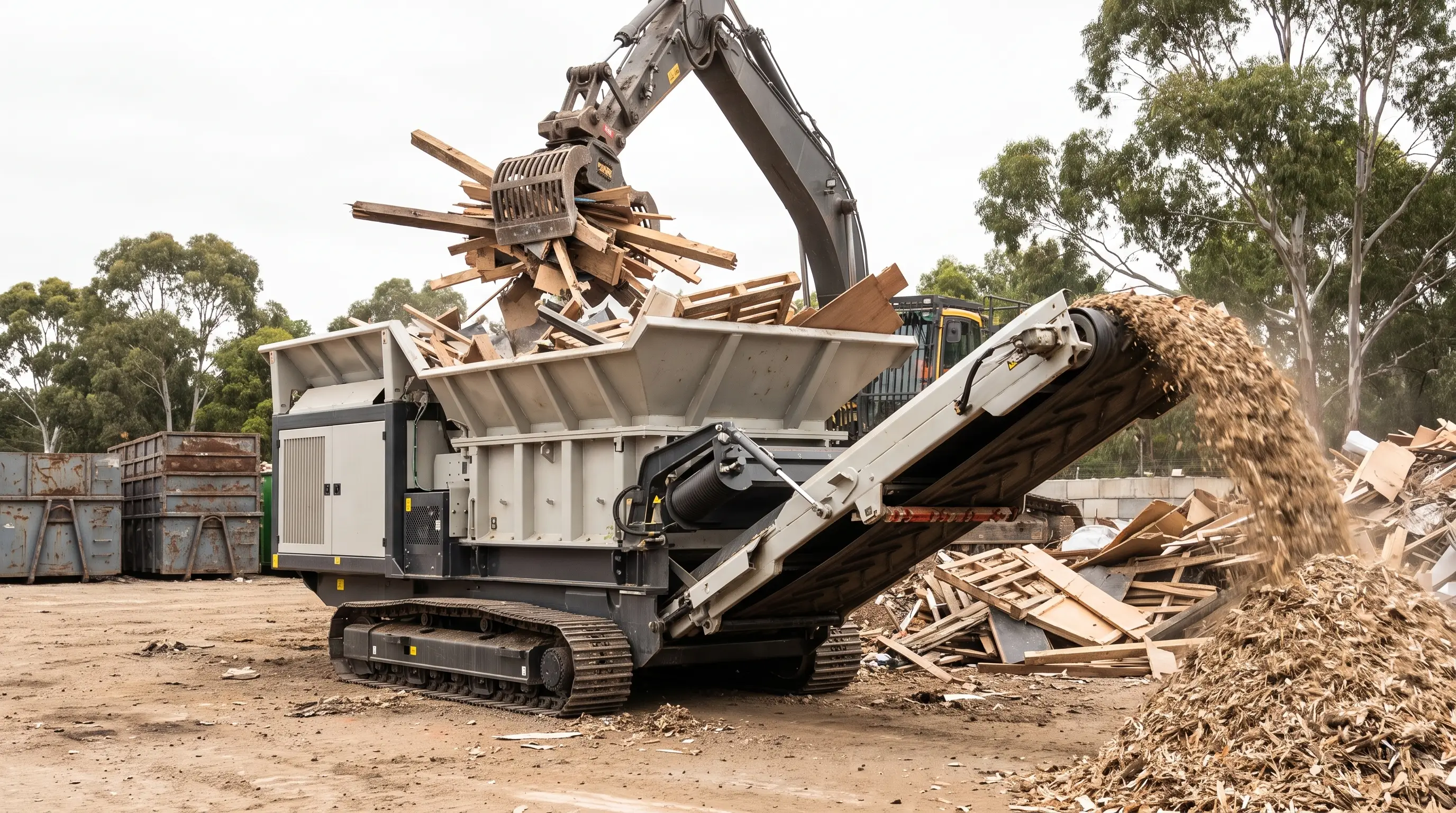
Demolition waste is difficult to move when it is bulky, mixed and inconsistent. Timber, pallets, formwork, board and general construction waste can take up a large amount of truck and tip space before it has been sorted or recovered.
A slow-speed shredder addresses that problem by tearing the material apart at low speed under high torque. The goal is usually volume reduction and a more consistent feed for sorting, screening or recovery, rather than the tightly controlled aggregate size produced by a crusher.
What is a slow-speed shredder?
A slow-speed shredder uses a high-torque shaft to pull bulky material into the machine and reduce it to a more uniform size. The lower operating speed gives the shaft the torque needed to work through awkward, dense or contaminated loads.
That makes the machine suited to material that is difficult to process in a fast grinder. A demolition load may include long pieces of timber, pallets, board, formwork and occasional contamination. The shredder breaks the load down so it is easier to handle, sort and transport.
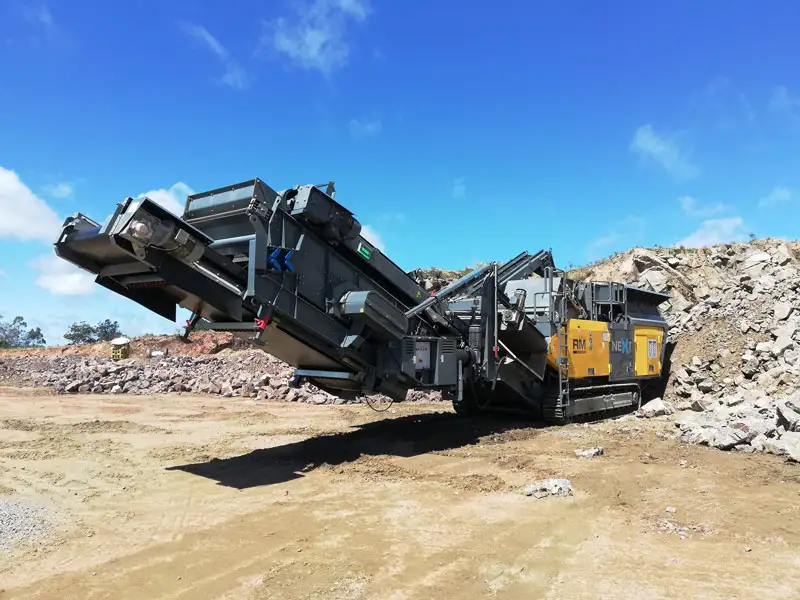
The Komplet Krokodile is a mobile slow-speed shredder supplied by Jaws Crushers. Its published specification includes a 1,500 mm shaft, 160,000 Nm of torque and a 160 kW driveline. It is rated to 150 tonnes per hour on construction waste, subject to the material and operating conditions.
Why bulky demolition waste needs a different approach
Demolition waste is rarely a clean, single-material stream. Even when a contractor separates the main materials, the remaining load can still contain a mix of timber, board, pallets and general construction waste.
Loose bulky material creates several practical problems:
- It occupies more truck space than its weight suggests.
- Long or awkward pieces are harder to load and stack.
- Mixed loads are slower to inspect and sort.
- Transporting air and unused void space increases the number of truck movements.
- Material that is too large for downstream equipment may need another handling step.
Shredding changes the physical form of the load. A more uniform output can be stockpiled, screened, magnetically separated or loaded more efficiently. The exact recovery process depends on the material stream and the equipment that follows the shredder.
How low speed and high torque work together
The key difference is the balance between speed and force. A high-speed machine relies on rapid movement to break or grind material. A slow-speed shredder uses a slower shaft and substantially more torque to pull, tear and reduce bulky feed.
That operating principle matters on demolition sites because the feed is often irregular. A long timber section behaves differently from a pallet, a sheet of board or a compacted mixed load. High torque helps the shaft keep pulling through material that would otherwise stall or jam a less suitable machine.
The Krokodile is designed around this low-speed, high-torque approach. Its 1,500 mm shaft develops 160,000 Nm of torque, while the 160 kW driveline keeps the machine working through dense construction waste. The machine is also listed for applications including timber, pallets, mixed and bulky waste, and volume reduction at transfer stations and recycling yards.
What happens to the waste after shredding?
Shredding is usually one stage in a wider material-handling process. Once the bulky feed has been reduced, the output can be directed to the next step that matches the project objective.
Sorting
A consistent shredded stream is easier for an operator or sorting system to inspect. Timber, metal and other recoverable materials can be separated more effectively when the load is no longer made up of large, interlocking pieces.
Screening
Screening can separate fines and different size fractions from the shredded material. This helps a recycling yard or transfer station create more manageable stockpiles and identify material that needs further processing.
Magnet recovery
Where ferrous contamination is present, a magnet can be used downstream to recover metal from a more evenly distributed stream. The result depends on the material and the complete plant setup, but uniform feed generally makes separation easier to manage.
Haulage
Reducing the bulk of the load can allow more material to fit into each truck. That can reduce truck movements and the volume-based cost of handling or tipping, although the actual saving depends on the waste contract, transport distance, contamination and local disposal charges.
Where a slow-speed shredder fits on a demolition site
A mobile shredder is most useful when the waste is generated away from a central processing facility or when moving the unprocessed material would create unnecessary haulage.
Typical applications include:
- Demolition sites with mixed timber, pallets, board and formwork.
- Transfer stations that need to reduce bulky incoming loads.
- Recycling yards processing mixed construction waste.
- Timber and pallet streams that need size reduction before recovery.
- Sites where reducing volume before transport is more important than producing a precise aggregate specification.
The mobile format lets the machine work close to where the waste is created. That can reduce the distance the bulky material travels before it is processed.
Shredder or crusher: which machine suits the material?
A shredder and a crusher solve different material problems.
Choose a slow-speed shredder when the feed is bulky, mixed, soft or awkward and the main objective is to reduce volume or prepare the material for sorting. Timber, pallets, formwork and general construction waste fit this use case.
Choose a crusher when the feed is hard material such as rock, concrete or asphalt and the objective is to produce a controlled aggregate product. Crushers reduce hard material through compression or impact, while shredders tear bulky material apart.
Some projects may use both types of equipment in sequence. For example, a site may separate bulky waste with a shredder and process clean concrete or rock with a crusher. The right arrangement depends on the feed, the required output and what the contractor intends to recover or sell.
What to check before choosing a shredder
Start with the material rather than the brochure. Record what is in the load, how much arrives per day and whether contamination is expected.
The useful questions are:
- Is the feed mainly bulky mixed waste, timber, pallets or board?
- Is the objective volume reduction, sorting, recovery or a combination?
- What throughput is needed during the busiest part of the job?
- Will the machine move between sites?
- What equipment will receive the output?
- Are there site restrictions around access, transport, noise, dust and operating hours?
- Does the project justify buying, or is hire more suitable?
For the Komplet Krokodile, Jaws Crushers publishes a 150 tonnes per hour rating on construction waste and a transport weight of 15,000 kg. Those figures provide a starting point for equipment selection, but a machine should still be matched to the actual feed and site conditions.
Buy or hire a slow-speed shredder?
Buying can make sense when a contractor has a regular stream of bulky waste and wants the machine available across multiple projects. Hire can be a better fit for a one-off demolition project, a temporary increase in volume or a business testing a new recovery process.
A proper comparison should include transport, setup, operators, maintenance, downstream screening, haulage and disposal. The lowest hourly machine rate is not always the lowest overall processing cost.
Jaws Crushers supplies mobile shredders for sale and hire Australia-wide. Its shredder range includes the Komplet Krokodile, with support for selecting equipment around the material, throughput and site conditions.
The practical result
A slow-speed shredder turns a difficult bulky load into a more manageable material stream. The benefit is not simply smaller pieces. It is the combination of reduced volume, easier handling and a more consistent feed for sorting, screening and recovery.
For demolition contractors, transfer stations and recycling yards, that can mean fewer truck movements and less space tied up by loose bulky waste. The right machine depends on the material and the job objective. If the feed is mixed and awkward, start with a shredder assessment. If it is clean rock or concrete that needs a saleable aggregate size, compare crusher options instead.
Frequently asked questions
What does a slow-speed shredder do?
It reduces bulky, mixed waste such as timber, pallets, formwork, board and general construction waste to a more uniform, sortable size by tearing it apart at low speed under high torque.
What can the Komplet Krokodile process?
The Krokodile is listed for construction and demolition waste, timber, pallets, mixed and bulky waste, and volume reduction. Jaws Crushers publishes a rating of up to 150 tonnes per hour on construction waste, depending on the feed and operating conditions.
Is a shredder the same as a crusher?
No. A shredder is designed for bulky, mixed or softer waste and volume reduction. A crusher is designed to reduce hard material such as rock, concrete or asphalt into a controlled aggregate product.
Can I hire a slow-speed shredder?
Yes. Jaws Crushers offers mobile shredder hire Australia-wide. Discuss the material, expected volume, transport requirements and site conditions before selecting a machine.
Where can I find the machine specifications?
The Komplet Krokodile product page lists the machine’s published specifications. You can also compare its application with the wider mobile shredder range. For hard rock and concrete, see the mobile crusher range.
Talk to Jaws Crushers about the job. Share the material, required throughput, transport needs and site conditions, and the team can help you compare a slow-speed shredder for sale or hire.