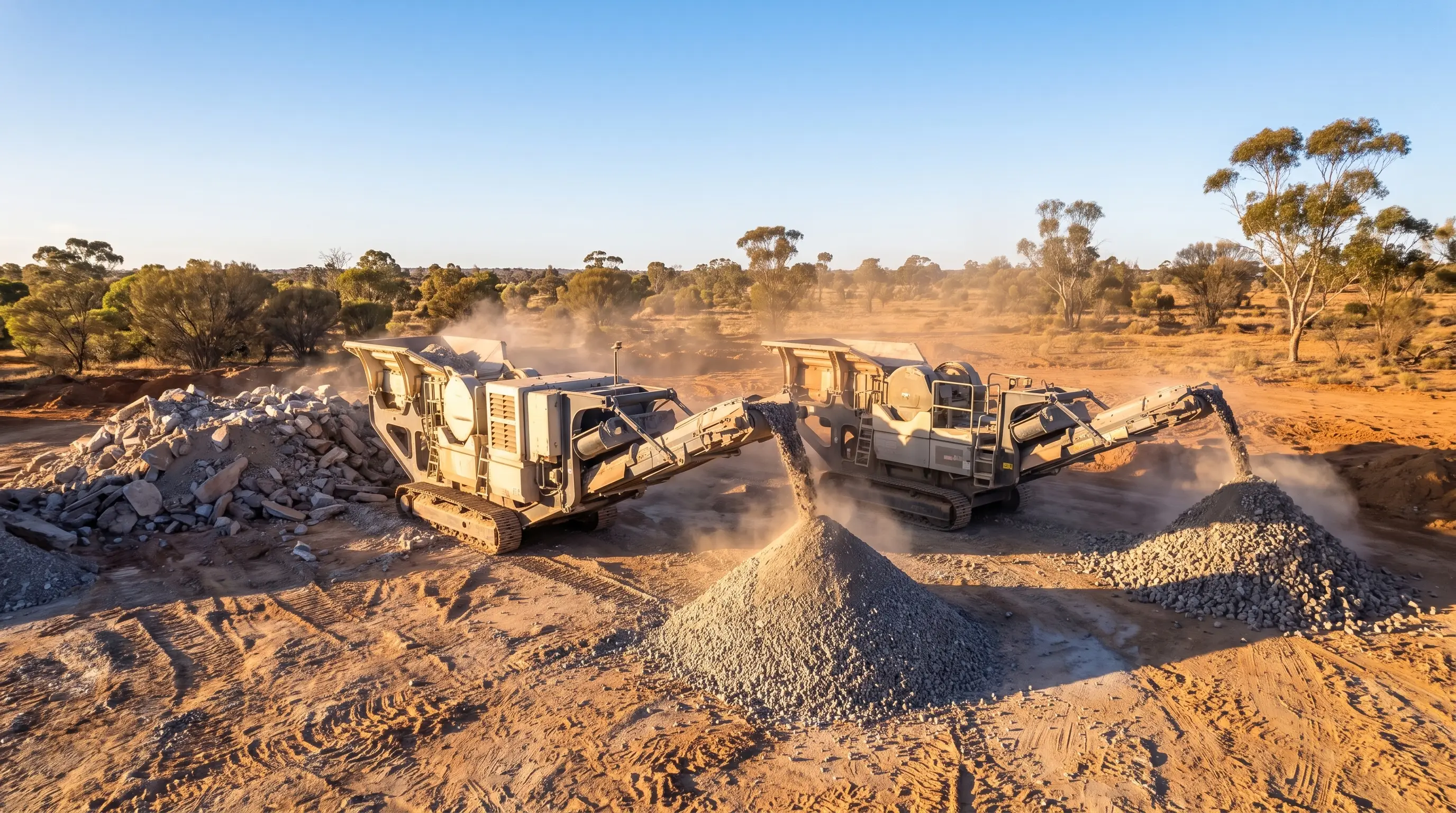
Material hardness decides the machine. Not brand loyalty, not what the dealer has on the yard, not price. A jaw crusher is built for the first hard hit on granite, reinforced concrete slabs, and anything rated above Mohs 5 on the mineral hardness scale. An impact crusher is built for the second pass on concrete, brick, and demolition fines where cubical shape and rebar separation matter most.
Get this decision wrong and you burn through wear parts, generate excess fines, and slow every machine downstream. Get it right and you match tonnage to output spec with less maintenance and fewer passes.
How a jaw crusher works, and when it belongs on site
Jaw crushers use compressive force between a fixed and a moving jaw to squeeze large rocks or debris down to size. On the compact Komplet jaws, feed openings run from 500 × 300 mm on the K-JC 503 to 815 × 520 mm on the K-JC 805, with product sizes from 20 mm up to 120 mm. The crushing ratio sits at roughly 6 to 8:1.
That compression mechanism makes them the most common primary crusher in aggregate applications because of their durability and simplicity. They handle materials rated Mohs 5 to 7: granite, basalt, heavy reinforced concrete. For heavy reinforced slabs and hard rock, a jaw crusher is the right first machine.
The trade-off is output shape. Jaw crushers produce coarser, more angular material. If your end product needs to meet a cubical spec for road base or drainage aggregate, a jaw alone will not get you there. That is where the impact crusher enters.
How a mobile impact crusher works, and when it belongs on site
Impact crushers leverage high-speed impact force to fracture materials, achieving a crushing ratio of 10 to 20:1. The rotor spins plate hammers at speed, and the collision shatters material along its natural fracture lines rather than squeezing it.
This mechanism suits materials rated Mohs 2 to 5: concrete, bricks, limestone, asphalt. The Mohs hardness of common construction waste varies broadly. Bricks sit around 3 to 5, concrete around 4 to 7, and granite up at 6 to 7. For medium-hardness materials like concrete, impact crushers provide better particle shape without excessive wear.
The output difference is significant. Impact crushers produce well-shaped material with clean fracturing and fewer needle flakes compared to compression-style crushers. That cubical shape matters when you are producing recycled aggregate for road sub-bases or concrete mixing.
Impact crushers also handle rebar separation far better than jaws. The high-speed impact shatters the bond between stone and rebar, making the steel easy to collect with a magnet. For concrete recycling and demolition waste processing, this is often the deciding factor.
The trade-off: maintenance frequency is higher than jaw crushers, and energy consumption runs higher too. Blow bars and impact plates wear faster on abrasive material. Push an impact crusher onto granite or dense basalt rated above Mohs 5 and you will replace wear parts at a rate that kills your cost per tonne.
Side by side: which material goes in which machine
| Material | Mohs Hardness | Recommended Crusher | Output Shape |
|---|---|---|---|
| Granite | 6 to 7 | Jaw crusher (primary) | Coarse, angular |
| Heavy reinforced concrete | 4 to 7 | Jaw crusher (primary) | Coarse, angular |
| Concrete (broken to feed size) | 4 to 7 | Impact crusher or jaw + impact | Well-shaped, cubical |
| Bricks | 3 to 5 | Impact crusher | Well-shaped, cubical |
| Asphalt | 2 to 4 | Impact crusher | Well-shaped, cubical |
| Mixed demolition waste | 2 to 7 | Jaw primary + impact secondary | Cubical after second pass |
Three decision rules cover most Australian demolition and recycling jobs:
- Heavy reinforced slabs or hard rock: jaw crusher for primary reduction.
- Final product must be cubical: impact crusher, either as the sole machine or as the secondary stage.
- Mixed recycling with hard and soft material: jaw crusher sets the pace at primary stage, impact crusher refines shape at secondary stage.
Impact crushers are widely used in construction waste crushing, sand and gravel yards, and concrete mixing applications and are suited to brittle stones and ores of medium-soft hardness and below, such as limestone and concrete. If your feed is already broken down and sits below Mohs 5, a single mobile impact unit can handle the job without a jaw upstream.
The two-stage setup: jaw primary, impact secondary
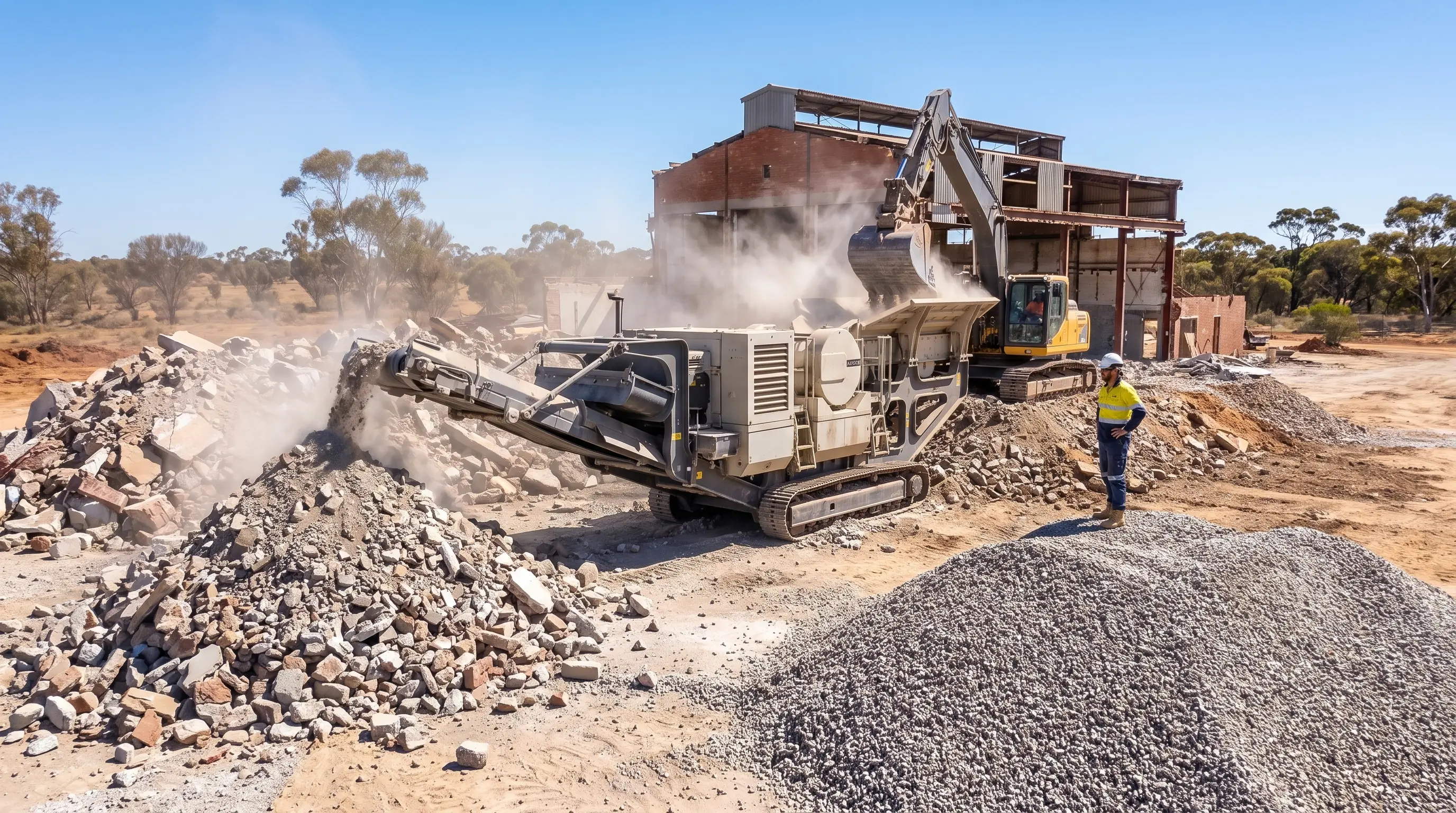
Running a mobile jaw crusher into a mobile impact crusher is the combination that handles the widest range of demolition material on a single site. The jaw does the heavy primary reduction. The impact crusher refines shape and liberates steel for magnetic separation.
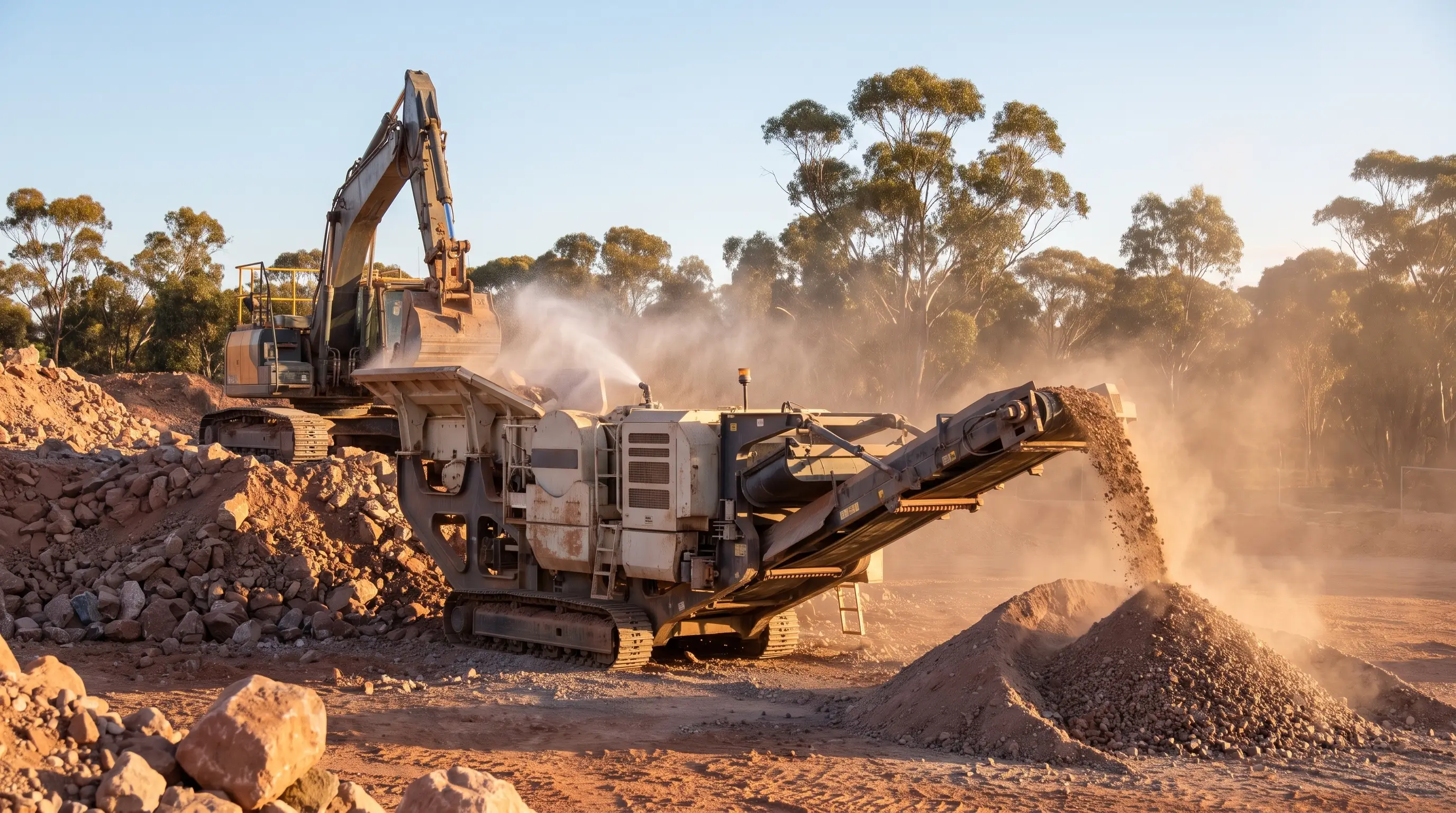
Mobile jaw crushers allow primary crushing closer to the material, reducing hauling and enabling faster setup. This is especially valuable in contract crushing and recycling applications where the plant moves between sites every few weeks.
The coordination between stages matters. If the primary crusher underperforms, oversized material pushes downstream, overloads the secondary crusher, increases wear, and creates production bottlenecks. If it over-crushes without control, it generates excess fines early in the process, reducing efficiency. Getting the jaw’s discharge setting right for the impact crusher’s feed opening is not optional. It is the difference between steady throughput and constant clearing.
The business case for on-site crushing
The alternative to crushing on site is trucking material to a transfer station or landfill and buying virgin aggregate for backfill. That equation has three cost lines that all move against you.
Tipping fees keep climbing as landfill capacity tightens, especially in metro areas. Processing on site removes the need for hundreds of truck trips. And the recycled aggregates you produce are a useable product for road sub-bases and drainage layers.
Matching the crusher to your material is what makes on-site processing viable. An impact crusher chewing through granite will eat blow bars faster than it produces aggregate. A jaw crusher producing angular output when the spec calls for cubical means a second pass or rejected material. The right machine for the feed keeps your cost per tonne where it needs to be.
For a deeper look at the financial side, see our breakdown of what a mobile crusher costs and how crusher wear parts affect your cost per tonne.
Machines that cover both sides
Jaws Crushers stocks mobile jaw crushers and mobile impact crushers so the conversation starts with your material, not with whatever happens to be available.
On the jaw side, the Komplet range includes the K-JC 503, K-JC 604, K-JC 704, and K-JC 805 for primary crushing of hard, abrasive feed. The Rubble Master RM-J110X handles higher-volume primary applications.
On the impact side, the Komplet K-IC 70 suits smaller recycling jobs, while the Rubble Master range (RM-70GO, RM-90X, RM-100X, RM-120X) covers medium to high throughput impact crushing.
Not sure which setup suits your site? Get in touch and we will walk through your material, your volumes, and your output spec.
Frequently asked questions
Can an impact crusher handle reinforced concrete?
Yes. Impact crushers are well suited to reinforced concrete because the high-speed impact shatters the bond between stone and rebar, making the steel easy to collect with a magnet. For heavy slabs, run a jaw crusher first to bring the feed down to size before the impact stage.
What Mohs hardness is too hard for an impact crusher?
Impact crushers are suited to materials rated Mohs 2 to 5. Above Mohs 5, wear on blow bars and impact plates accelerates sharply. Granite (Mohs 6 to 7) and similarly hard materials should go through a jaw crusher instead.
Do I need both a jaw and an impact crusher on site?
If your feed includes a mix of hard primary material (thick slabs, natural rock) and softer demolition waste, running both in sequence gives you the widest coverage. The jaw handles primary reduction; the impact crusher refines shape and separates steel. For sites processing only broken concrete and brick below Mohs 5, a single impact crusher can handle the job.
Is jaw crusher output good enough for road base?
Jaw crushers produce coarser, more angular output. Some road base specs accept angular material, but if the spec calls for cubical aggregate, you will need an impact crusher as a secondary stage to reshape the product.