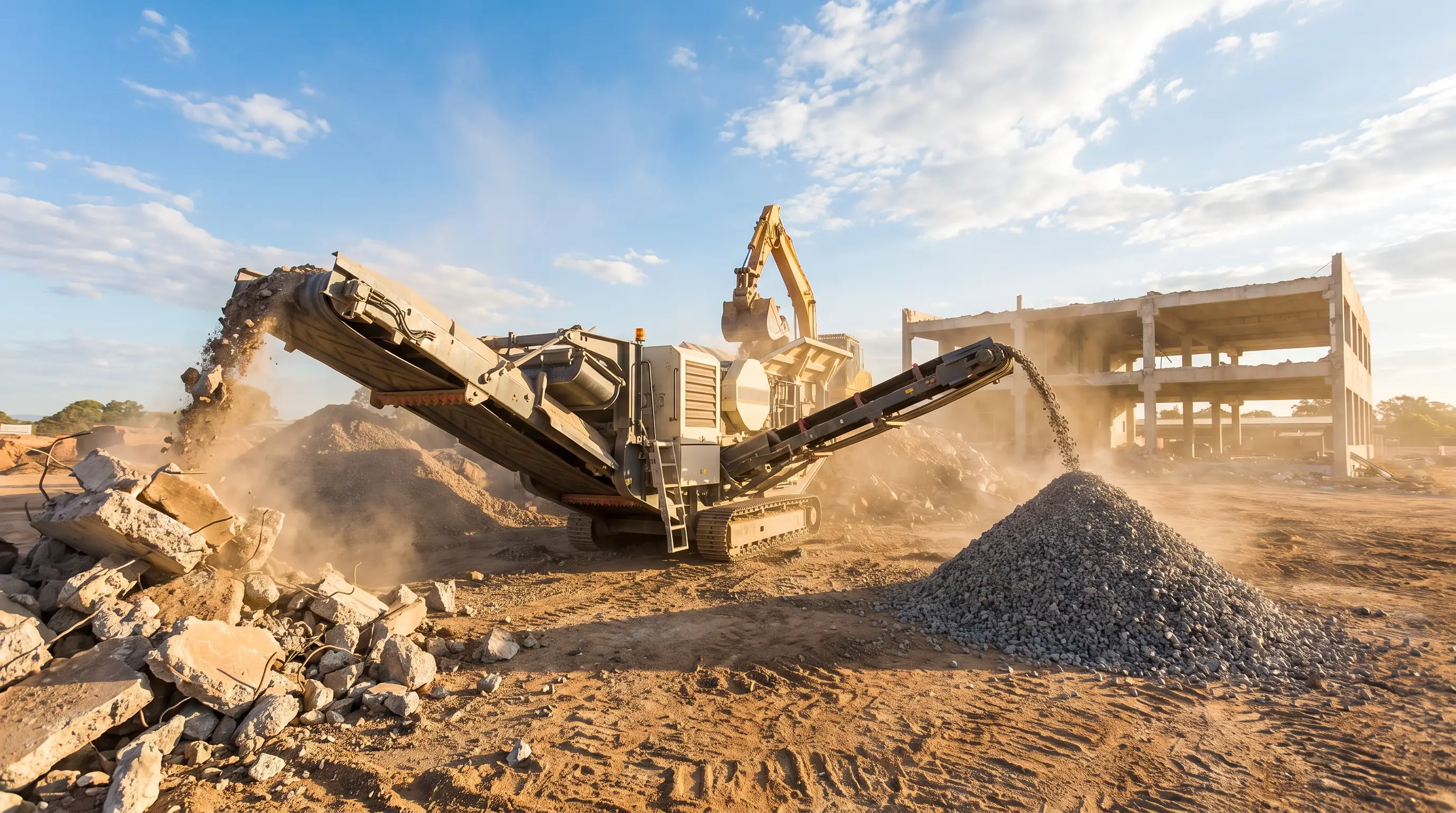
Ask most Australian contractors what a concrete crusher costs to hire and they want a daily rate. You won’t get one. Crusher hire in Australia is quoted per job, and the number that lands on your quote depends on half a dozen variables that a flat day rate cannot capture. A compact jaw on a two-day knockdown a suburb from the depot is a different proposition to a tracked impactor mobilised across a state for a month-long bridge demo. The question is not what the rate card says. The question is whether crushing on site saves you more than the hire costs you, and for most medium-sized demolition jobs the answer is yes before you even factor in what you save on trucking.
Why nobody quotes a daily rate
The variables that drive a crusher hire quote are machine size, how long you need it, whether it runs operated or dry hire, the float distance from the depot to your site, and how hard and abrasive your material is. Two jobs with the same tonnage can land at opposite ends of the pricing spectrum because one is crushing soft demolition brick ten minutes from the yard and the other is chewing through blue metal granite hours away.
A compact crusher on a short job near base costs very different to a high-output impactor mobilised across a state for weeks. There is no single day rate. Jaws Crushers quotes per job rather than publishing a rate card, because the combination of machine size, duration, operated versus dry, float distance, and material abrasiveness makes any single number misleading. The quote you get reflects your actual job, not an average that leaves someone else’s float distance baked into your price.
What Australian contractors actually pay
The benchmark rates from iSeekplant give you a starting point. Here is what dry hire looks like across the three common jaw crusher classes in Australia:
| Crusher Type | Throughput (tph) | Dry Hire (per day) | Operated (per day) |
|---|---|---|---|
| Single Toggle Jaw | 50–100 | $900–$1,100 | $1,200–$1,400 |
| Mobile Jaw | 100–250 | $1,200–$1,450 | $1,600–$1,900 |
| Tracked Jaw | 150–300 | $1,400–$1,650 | $1,800–$2,100 |
Those are the machine rates. The ancillary costs are where the real total builds:
- Transport: $1,000–$3,000 each way, depending on float distance
- Fuel: $30–$50 per hour while the machine is running
- Labour: $50–$100 per hour for a skilled operator if you run it operated
- Wear parts: $500–$1,000 per week, covering jaws, liners, and belts
A single toggle jaw on dry hire for a week, with transport and fuel, runs somewhere in the low thousands. The same job with a tracked jaw on operated hire pushes well past that. The spread between the cheapest and most expensive option on the same tonnage can be two to three times, which is why the per-job quote matters more than any rate card.
The real comparison is on-site crushing versus haul-and-buy
The mistake most cost comparisons make is lining up hire rates against purchase prices and calling it a day. The real comparison for buying versus renting a crusher is processing material on site versus hauling it off and trucking new aggregate back in.
Every load of demolition debris you send to a landfill costs you twice. Once in trucking and tipping fees to get rid of it, and again when you buy and haul in fresh base, fill, or road stone to replace it. A rented crusher collapses both of those costs into a single machine sitting on your site.
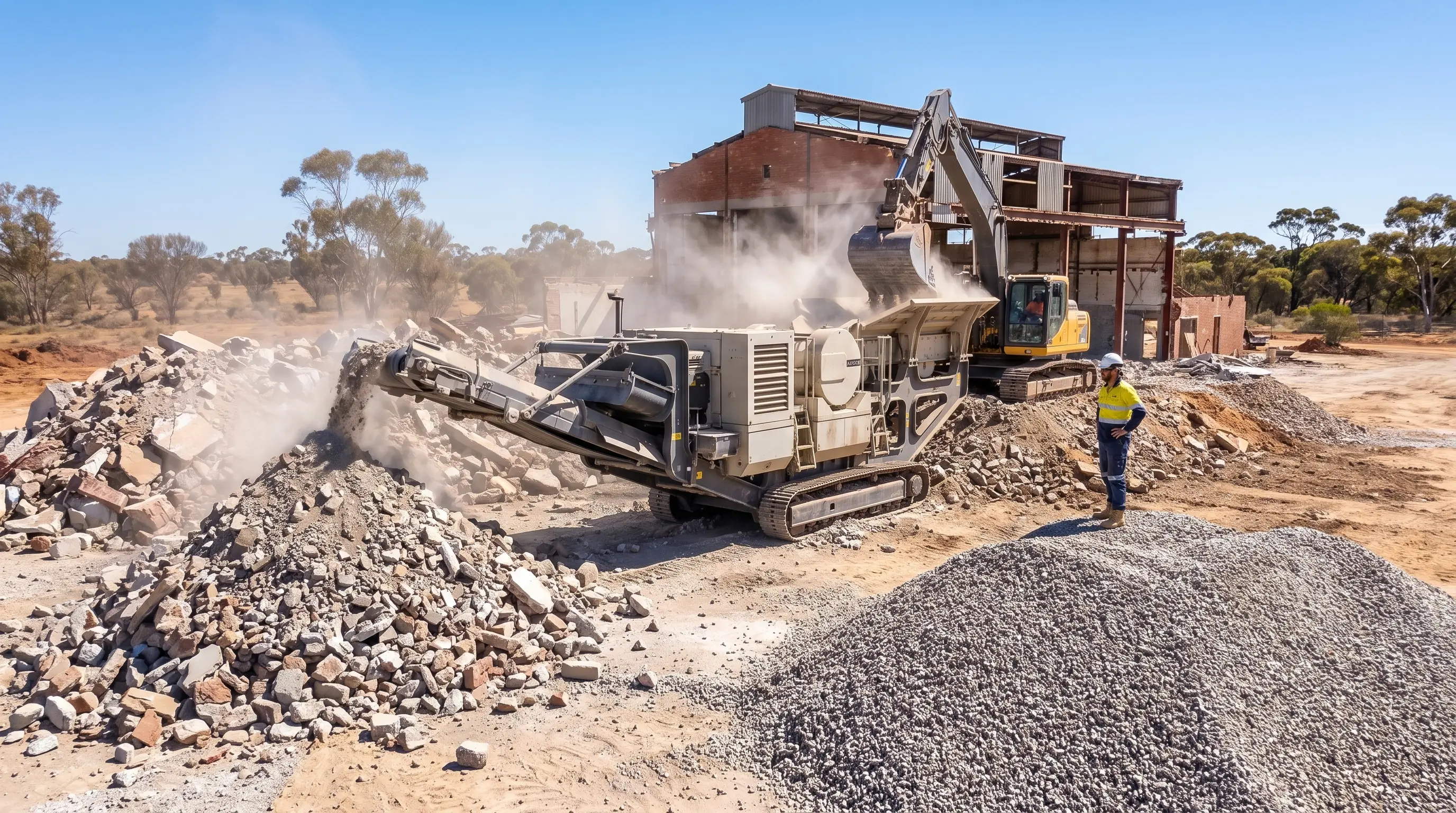
Removing tonnes of rubble from sites is expensive. Collection charges, transport, and landfill fees can run into thousands on larger jobs. Instead of paying muck-away costs, you process waste directly on site. The crushed material can be reused as needed, eliminating the need to purchase new aggregate. If you produce more than the job needs, contractors can sell the crushed material to others, turning waste into revenue. The hire cost stops looking like an expense and starts looking like the cheaper half of a two-sided equation.
Three usage bands that tell you whether to hire or buy
The annual numbers break into three clear bands, and the decision at each level is different.
Light use: fewer than 4 weeks per year. Two rental weeks at $3,000 per week plus $2,000 for delivery and pickup puts your annual cost around $8,000. Hire is the obvious choice. You get the machine when you need it, you pay nothing when you don’t, and you carry no maintenance, storage, or depreciation. For contractors who take on one or two demolition jobs a quarter, this is the sweet spot.
Medium use: 5 to 12 weeks per year. Eight rental weeks at $3,000 per week plus $4,000 in transport lands around $28,000 a year. Now you are paying significant money and still do not own a machine. Hire is still viable, and for many contractors it remains the right call, but the maths starts to flip. At this level, you should at least run the numbers on a used machine or a lease arrangement, because the annual hire bill is approaching a down payment.
Heavy use: more than 3 months per year. Five rental months at $10,000 per month plus $6,000 in delivery and extras puts you around $56,000 a year. At this level, you are close to the yearly cost of owning a crusher. Weekly concrete crusher rental for compact machines runs $2,500–$3,500, while monthly rental for larger crushers often hits $8,000–$12,000. If your hire bill is north of $50,000 a year, you are financing someone else’s machine when you could be building equity in your own.
| Usage Band | Annual Hire Cost | Decision |
|---|---|---|
| Light (<4 weeks/yr) | ~$8,000 | Hire wins. No contest. |
| Medium (5–12 weeks/yr) | ~$28,000 | Hire is viable; start running ownership numbers. |
| Heavy (>3 months/yr) | ~$56,000 | Buying starts to make sense. |
When buying a crusher starts to make sense
Ownership makes sense when crushing is a year-round activity, like a contractor running a permanent recycling yard, a producer selling aggregate, or an operation feeding multiple jobs continuously. If the machine runs most of the year and crushing is its own revenue line, owning converts rental spend into an asset.
The flip side is that owning comes with its own overhead. You carry the maintenance, the storage, the transport logistics, and the depreciation. A machine that sits idle for six months is not an asset. The threshold is not a dollar figure. It is whether crushing is a regular part of your workflow or an occasional requirement. If you are running a permanent recycling yard, selling aggregate, or feeding multiple jobs continuously, buy. If you are a general contractor who crushes twice a year, hire. The machine that runs most of the year and earns its own revenue line is the one worth owning.
Choosing the right machine for the job
Matching the crusher to the material and the site is where hire gives you an edge. You can pick the right machine for each job rather than running whatever you own.
Jaw crushers are the workhorses for primary crushing and recycling, busting down concrete, hard rock, and demolition debris into manageable pieces. Impact crushers shine on softer to medium material and produce a more cubical, spec-friendly product, which is why they are favoured for concrete and asphalt recycling into base aggregate.
Size matters in both directions. Compact jaws around 30–80 tonnes per hour suit tight sites and smaller jobs. Mid-range impactors run 140–250 tph. The biggest machines handle 350–450 tph for quarry and large recycling duty. Oversizing wastes money on a machine you do not need. Undersizing blows out your hire days because the crusher cannot keep pace with the demo crew.
Hired crushers can handle reinforced concrete. Hydraulic release systems pass tramp iron and clear blockages, and rebar liberates cleanly from the aggregate stream, ready to be pulled off with an overband magnet.
Processing material on site means less waiting for skips to be collected and replaced. This keeps projects moving and reduces labour costs. Instead of paying muck-away costs, you process waste directly on site. The crushed material can be reused as needed, eliminating the need to purchase new aggregate. The avoided costs are real: no trucking, no tipping, no buying back what you already had.