The spreadsheet that decides mobile versus fixed usually starts with the wrong number. It lines up purchase price against throughput and stops, which is how you end up pricing a fixed plant for a quarry when the job moves in eight weeks. On an Australian job the two biggest line items are rarely the machine. They are trucking material off site and trucking it back on.
Ask the mobile crusher vs fixed crusher question in a brochure and you get a spec sheet. Ask it on site and you get a different answer: it depends on how far your material travels and how many weeks a year you actually crush.
Quick answer: for most Australian contractors, a mobile crusher wins on total cost. Crushing on site removes both haul legs and pays for itself in under five months at minimal volumes. A fixed plant only beats that at sustained, single-site, high-tonnage output.
The question is haul-and-tip, not throughput
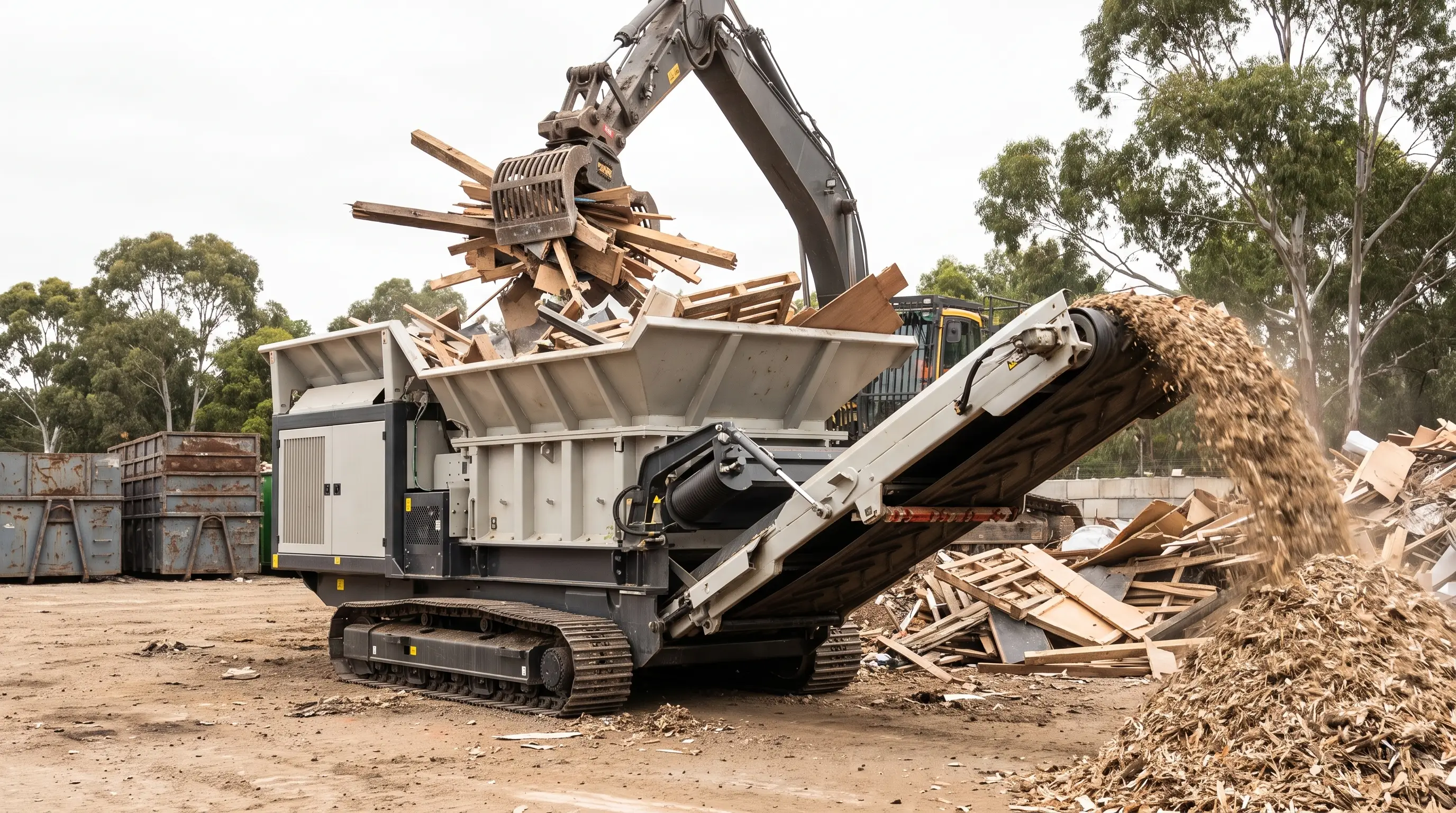
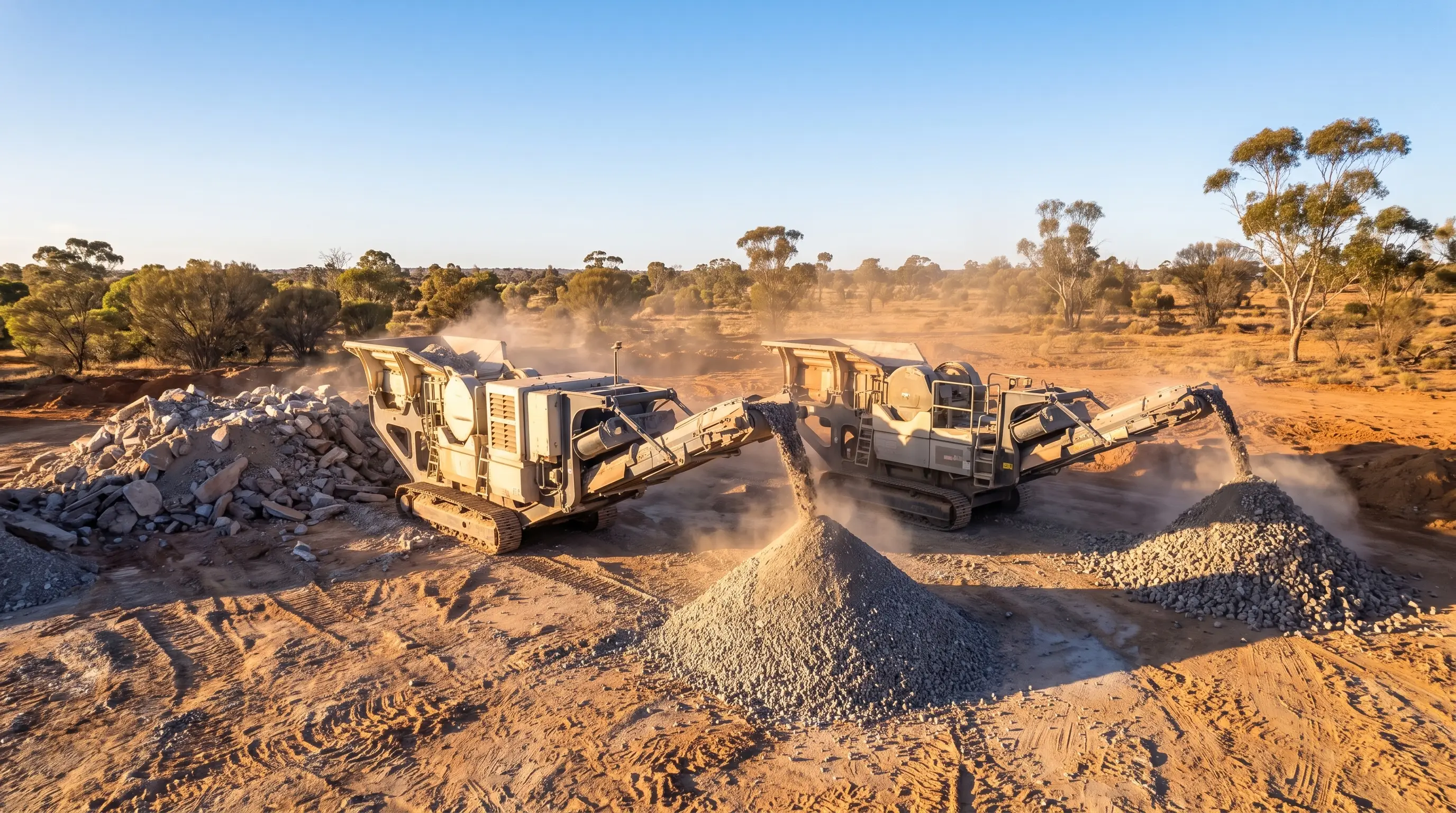
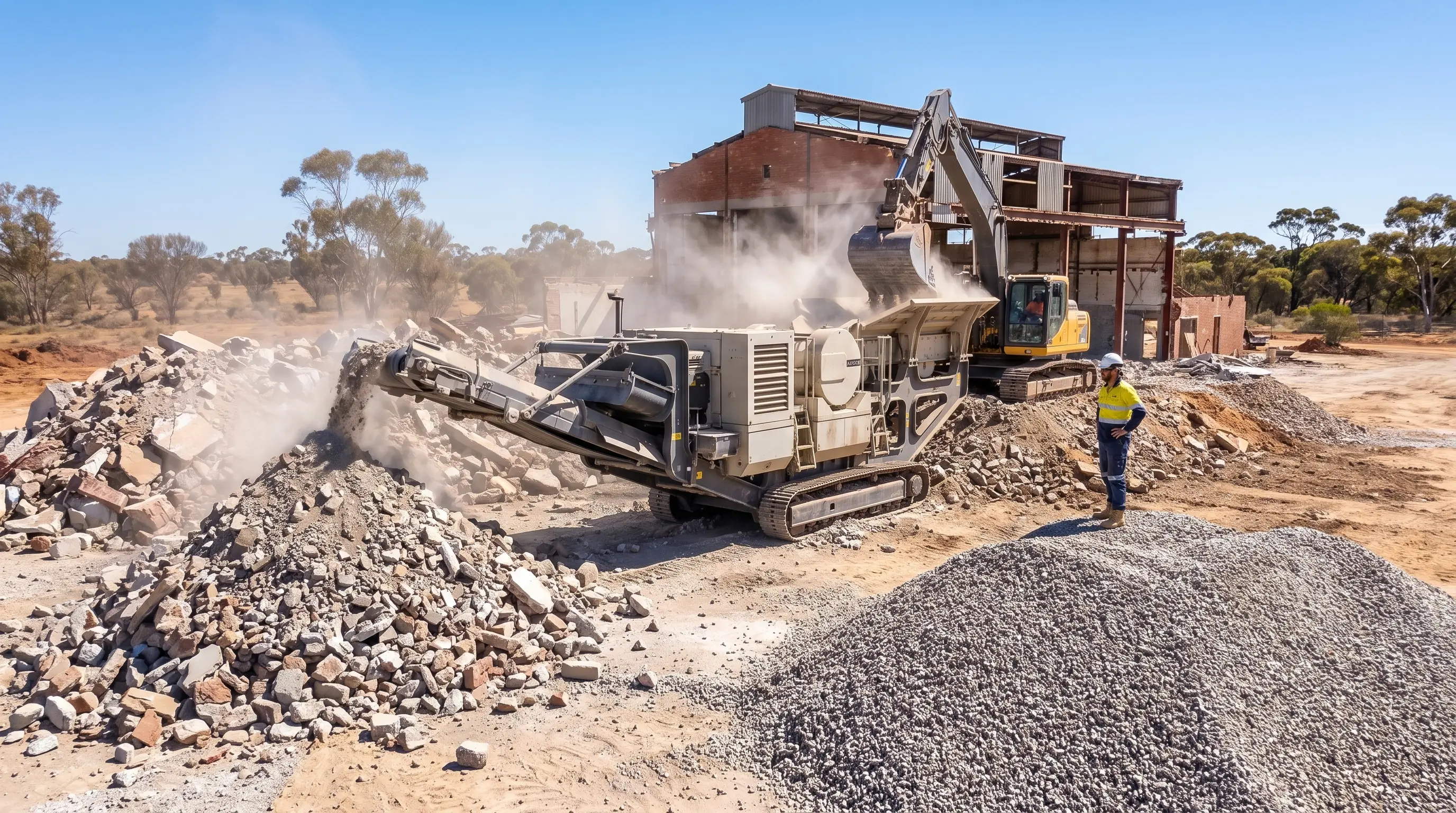
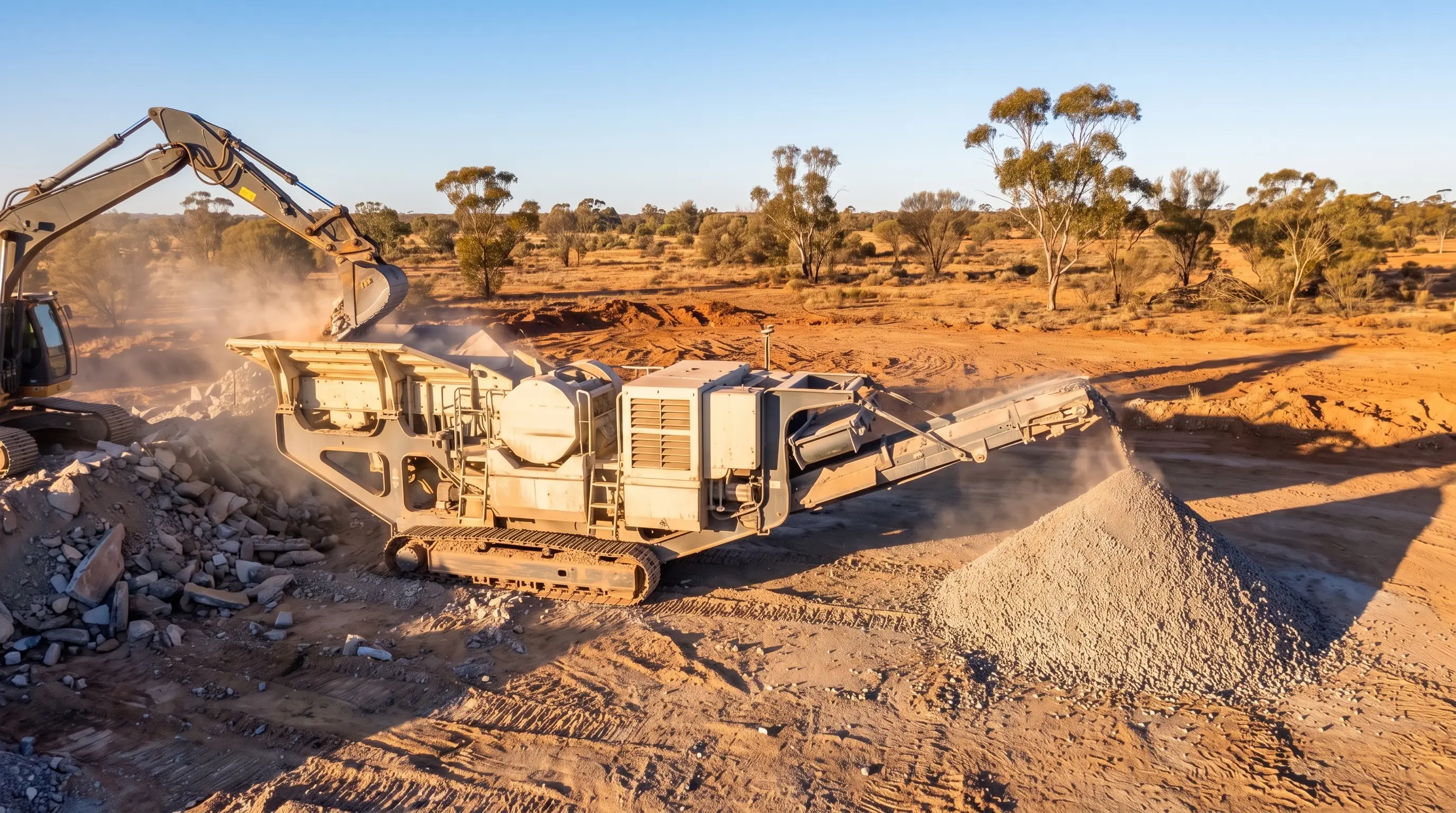
A mobile crusher is a self-contained, track-mounted machine that crushes stone, concrete or demolition debris on site, turning it into usable aggregate without a stationary facility. It shows up in mining and quarrying, road and highway construction, concrete and asphalt recycling, large-scale demolition, and aggregate production.
What that list shares is movement. The material sits in one place today and somewhere else next month, and a fixed plant cannot follow it. The spec comparison makes the point:
| Fixed (stationary) | Mobile (tracked) | |
|---|---|---|
| Average infeed size | 1,000 mm | 800 mm |
| Average capacity | 500 to 750 tph | up to 500 tph |
| Feeding method | Dump truck | Excavator / wheel loader |
A stationary plant is fed by dump truck and built around a 1,000 mm infeed and 500 to 750 tonnes per hour. A tracked mobile machine takes an 800 mm infeed and up to 500 tph, fed from an excavator or wheel loader. The fixed plant wins the spec sheet. It loses on almost everything that costs money off the spec sheet.
Three crusher types, three different cost profiles
The mobile category is not one machine. Jaw crushers handle primary crushing and hard rock. Impact crushers are the recycling workhorses, turning concrete and asphalt into smooth, well-shaped aggregate. Cone crushers do secondary and tertiary work, producing the uniform product concrete and asphalt production needs.
Each maps to a different cost profile. Crushing demolition concrete favours an impactor, which pays for itself through what you no longer truck away. Hard quarry rock favours a jaw for primary reduction. Getting this wrong costs more than the mobile-versus-fixed decision ever will.
What each option actually costs
Here the price tag separates from the total cost. A mini jaw crusher sits well under A$100,000. A compact tracked jaw runs into the low-to-mid hundreds of thousands. A fully specced compact impactor with an on-board screen and return conveyor can push past A$1 million landed.
Hire runs $900 to $1,100 a day for a 50 to 100 tph jaw, and $1,400 to $1,650 a day for a tracked jaw in the 150 to 300 tph band. Weekly rental for a compact machine is $2,500 to $3,500, and monthly rental for a larger crusher lands at $8,000 to $12,000. Transport is $1,000 to $3,000 each way, and wear parts on jaws, liners and belts run $500 to $1,000 a week. The full picture, and the hire options, are laid out in what a mobile crusher actually costs.
A fixed plant does not compete on that first number. Compact mobile crushers are dramatically less expensive to buy than stationary plants, often by an order of magnitude, and they skip the site-prep costs of foundations, permits and electrical infrastructure. A stationary plant needs extensive foundations, a reliable electrical supply and regulatory approvals, and can take up to a year to erect. The machine is not the price. The machine plus a year of groundwork is the price.
The haul-and-tip maths that decides it
This is the section the spreadsheet keeps missing. On a fixed-plant job every load costs twice: trucking demolition debris off site with tipping fees, then trucking replacement aggregate back in. Crushing on site removes both legs.
Mobile crushers cut hauling, labour, fuel and tyre costs against a fixed plant, partly by eliminating the big haulers and their dump-truck tyres, which can run over $30,000 each. That is why the payoff is fast. You are not really buying a crusher. You are buying out your own trucking bill.
Which usage band you sit in settles it
The decision sorts into three bands, and the numbers are blunt. Light use, under four weeks a year, costs around $8,000 in hire once delivery and pickup are added, and hire is the obvious call. Medium use of five to twelve weeks lands near $28,000 a year, where a used machine or a lease starts to make sense. Heavy use beyond three months reaches about $56,000 a year, close to the yearly cost of owning.
Tax does not rescue a big capital purchase the way some US buying guides imply. The instant asset write-off is capped at A$20,000 per asset, so no crusher comes close to qualifying.
Lifespan tilts further toward mobile. A well-maintained mobile crusher lasts 10 to 20 years, and machines have run past 60,000 hours in Australia. Mobile tracked units also hold resale value far better than stationary plants, which carry poor resale value and stay bonded to one site.
When mobile wins, when fixed wins
Mobile wins for contract crushing, multiple sites, recycling and remote work. A tracked machine crushes productively within 15 minutes of arriving on site: position it, fold out the conveyors, connect the dust-suppression line, run a short warm-up, feed it. Fixed wins for one thing: a single site, run permanently, at sustained high volume, where you are certain the tonnage will still be there in five years.
That certainty is rarer than it looks. jawscrushers.com.au sells only mobile equipment, from compact tracked jaws to impactors with on-board screens, because it builds for the operator whose job moves. If your job moves, the fixed plant is the expensive answer to a question you did not ask.