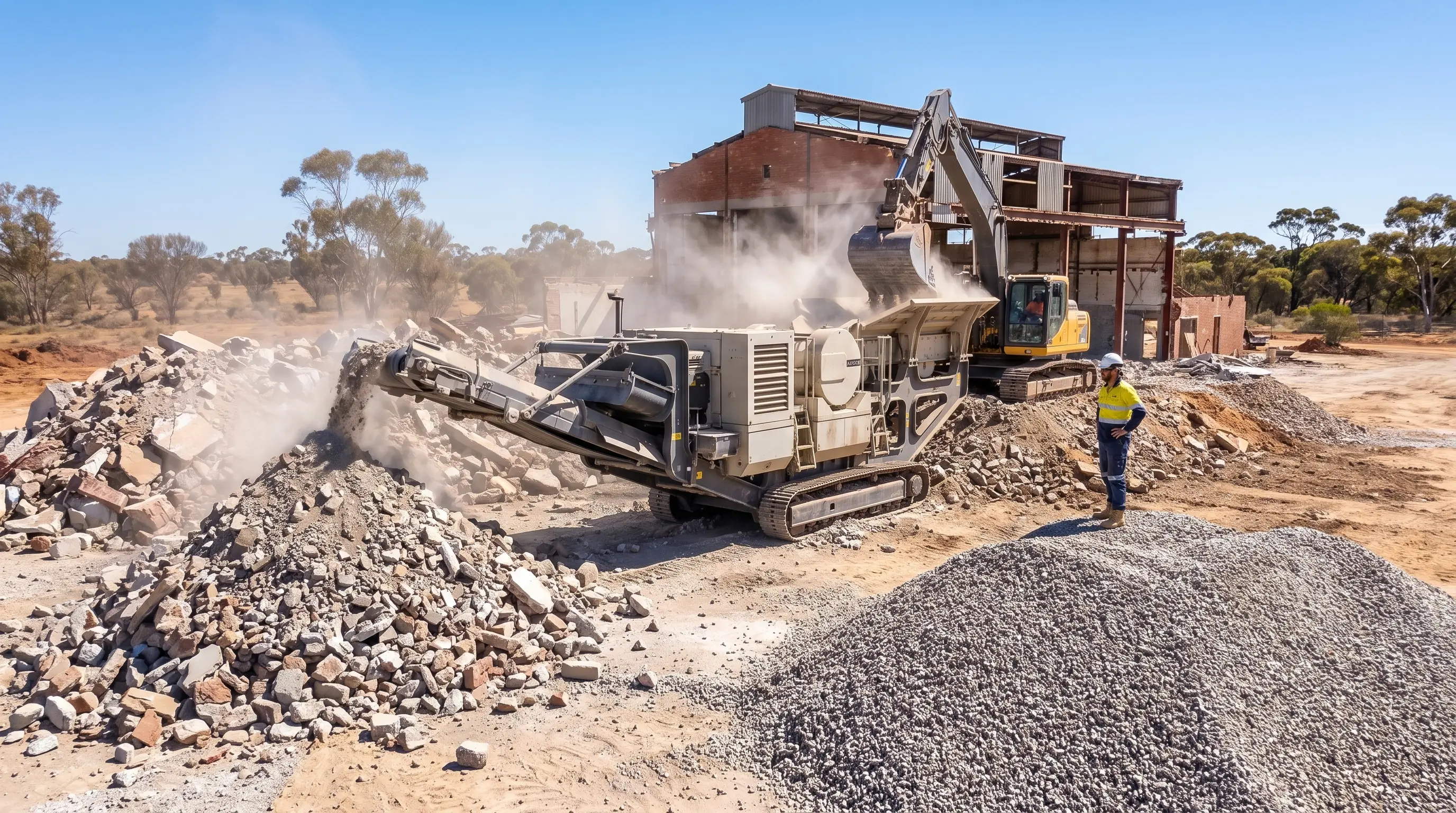
Crusher dust is the part of the job most operators don’t want to think about. You can see the cloud, hose down the hopper, and keep feeding, but the particles small enough to inhale are the ones that matter, and they don’t settle just because the pile looks damp. Australia stopped treating those fines as housekeeping in 2020, when the silica exposure standard was cut from 0.1 to 0.05 mg/m³. Water misting is the most proven retrofit for crusher dust suppression, and the numbers behind it hold up under scrutiny.
Why Crusher Dust Is Dangerous
When stone, concrete and asphalt go through a crusher, they release respirable crystalline silica, or RCS, the quartz and cristobalite particles small enough to travel deep into the lung. That dust has been linked to chronic lung disease and a higher risk of tuberculosis. It also causes silicosis, an incurable and often fatal lung disease, and NIOSH’s recommended exposure limit for the dust is 50 µg/m³. The toll is concrete: between 1968 and 2016, silicosis killed 17,155 workers in the United States.
Australia Cut the Standard in Half
Australia’s workplace exposure standard for respirable crystalline silica is now 0.05 mg/m³, measured as an 8-hour time-weighted average. That is the concentration a sampler clipped to a worker’s collar has to stay under across a full shift. Safe Work Australia halved the limit from 0.1 mg/m³ in 2020, and Comcare moved its own standard to 0.05 mg/m³ from 1 July 2020. The pressure has only increased since. NSW introduced stricter workplace health and safety measures for tunnelling projects in March 2025, with an expert taskforce, and a national ban on silica-containing engineered stone came into force in July 2024.
How Water Misting Works
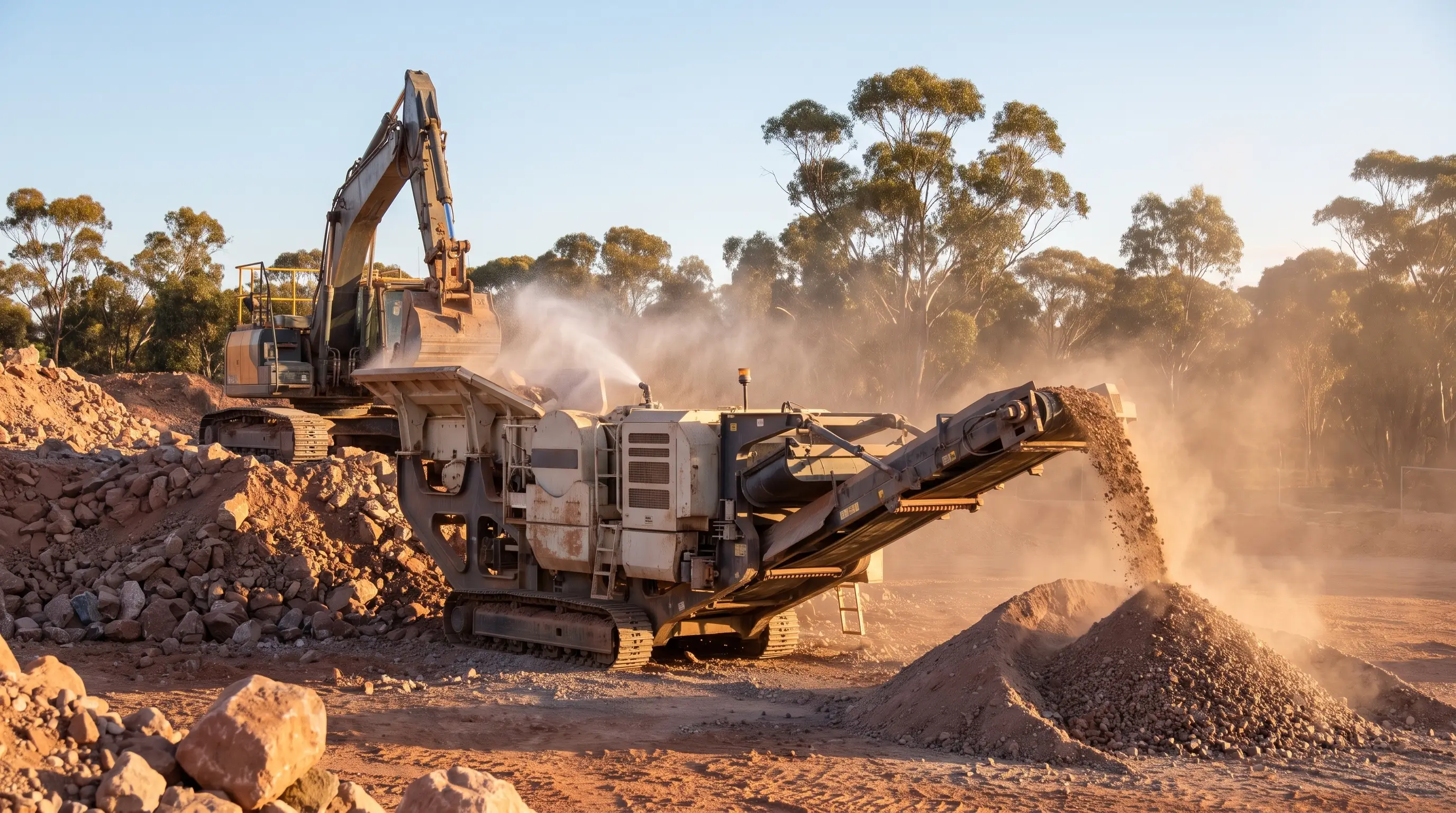
Water misting suppresses dust by spraying fine water droplets that bind with airborne dust particles and help them settle. Droplet size is what decides whether it works. The optimal droplet for dust suppression is smaller than 50 micrometres, because droplets that fine stay airborne long enough to catch particles that bigger drops simply fall past. That is why systems run high-pressure nozzles at the points dust escapes: hoppers, transfer points and discharge belts.
What Water Misting Actually Delivers
A peer-reviewed study of stone crusher mills in India measured what happened when water spray controls went in. Average respirable quartz fell 82% and cristobalite 69%. The controls were relatively inexpensive, local-market modifications rather than a machine redesign, which is what makes misting a practical fix instead of a wish.
What Crusher Dust Does When You Wet It
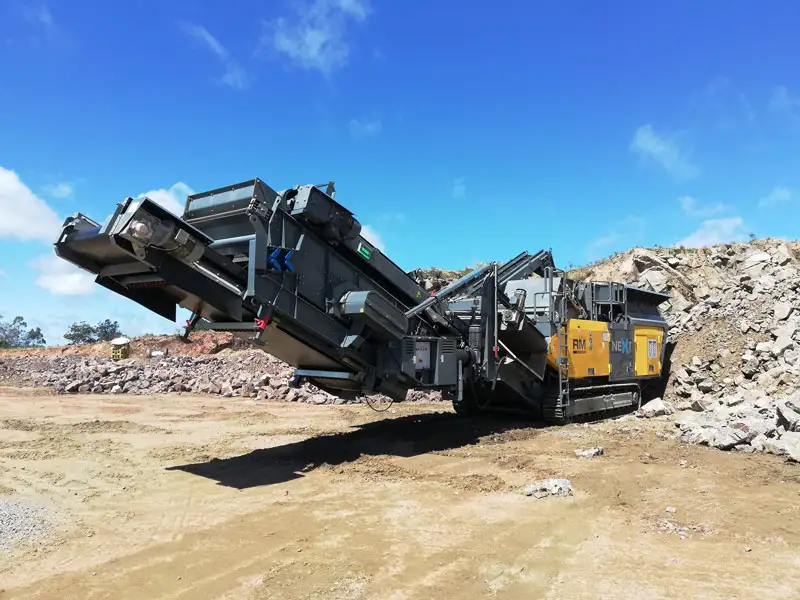
Crusher dust holds fines and does not drain, which is why you keep it out of places that need water to move through. That same property makes it cheap and useful as a base: crusher dust is often cheaper than sand for bedding and packing. It screeds to a smooth bed and packs tight, but the fines that give it that behaviour are exactly what becomes airborne silica at the crusher. The Komplet K-IC 70, a compact impact crusher, ships with dust suppression water spray nozzles as standard. At jawscrushers.com.au, that machine sits alongside the Rubble Master range, so when you spec a crusher for an Australian site, suppression can arrive fitted on the machine rather than bolted on later.
Building a Dust Management Plan That Holds Up
Misting on its own won’t stand up as a dust management plan, and regulators will treat it accordingly. A person conducting a business or undertaking must run air monitoring where there is uncertainty about whether exposure could exceed the 0.05 mg/m³ standard. NSW’s March 2025 measures point the same way, giving workers access to air monitoring data and keeping a silica register of at-risk workers. In practice, a compliant plan pairs wet suppression at the crusher with personal air sampling, health surveillance for anyone regularly exposed, and records that show both the controls and the numbers. Start with the machine: a crusher that ships with dust suppression nozzles removes the hardest step, and the rest is monitoring to prove you are under 0.05 mg/m³.