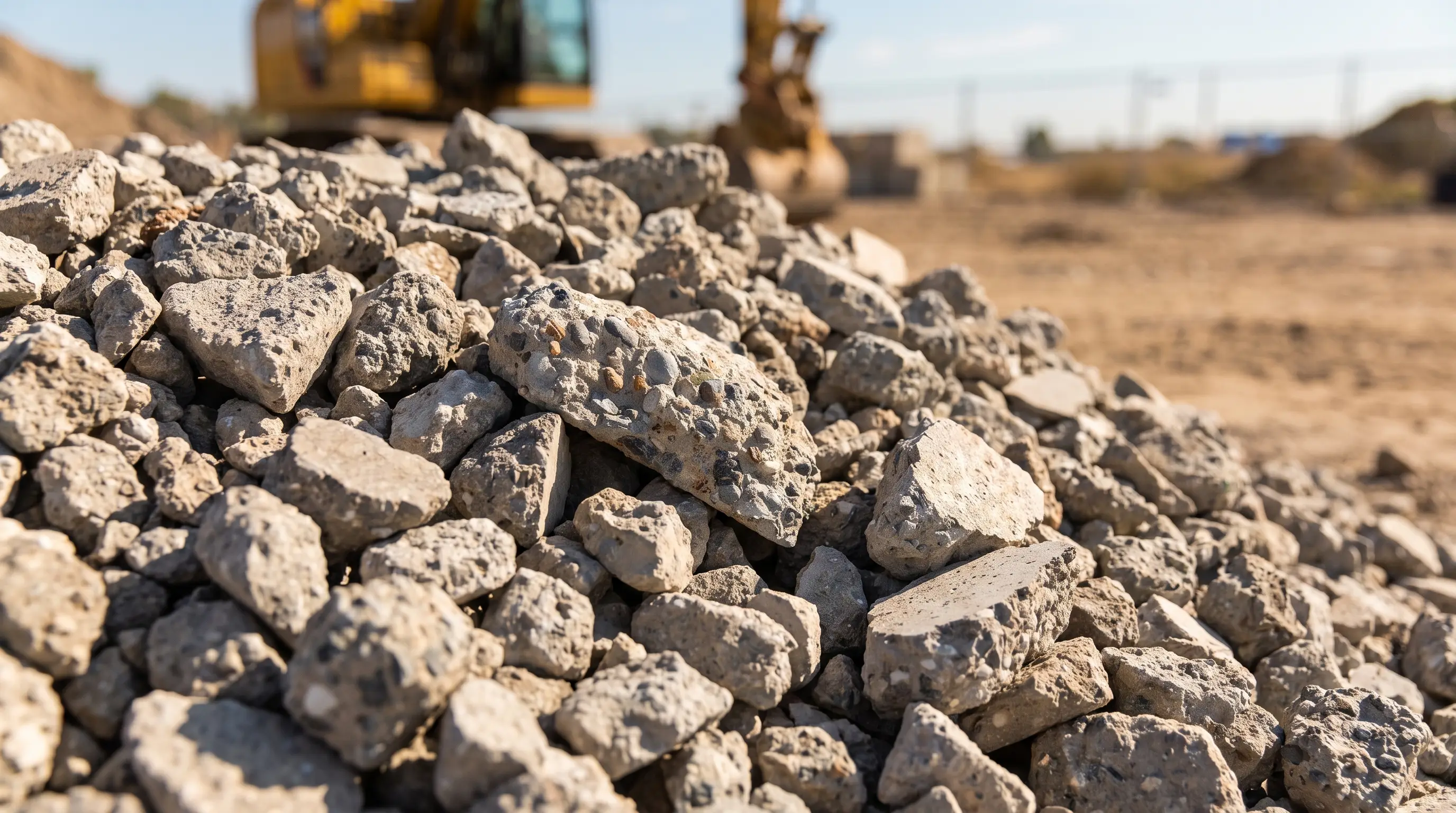
A contractor paying to dump concrete and then paying again to buy crushed rock back is running two invoices for the same material. The slab you just tore out is graded aggregate in a different shape. That is the practical starting point for recycled concrete aggregate, and the numbers behind it are worth knowing before your next job.
What Is Recycled Concrete Aggregate (RCA)?
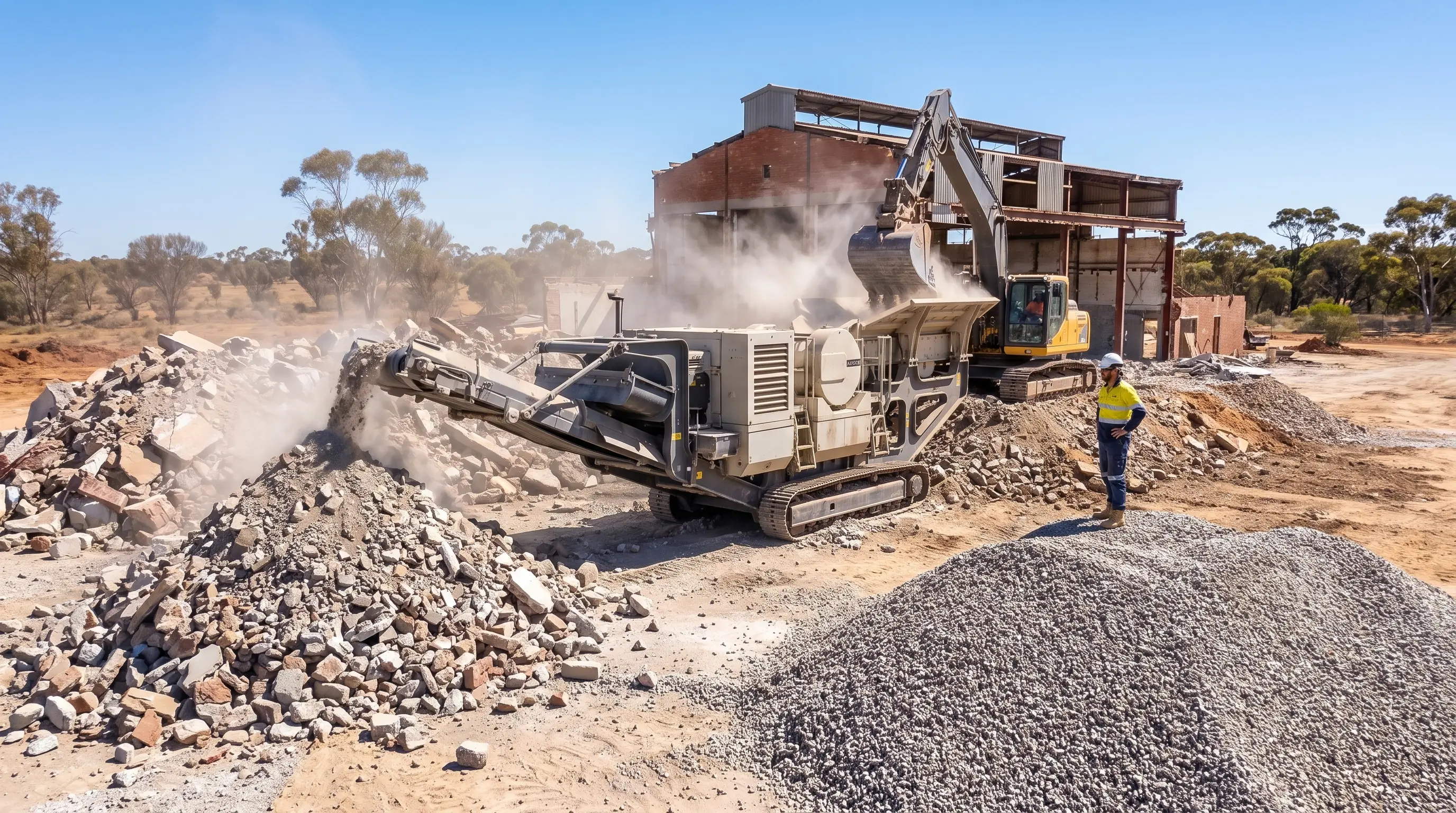
Recycled concrete aggregate (RCA) is produced by crushing concrete reclaimed from demolished highways, buildings and other structures. The processing chain is straightforward: a jaw crusher breaks the slabs down to size, a magnet pulls the rebar off the belt, and a screener sorts the output into graded products. The result is angular, well-graded stone that compacts tightly and drains freely.
RCA behaves differently from virgin aggregate in ways that matter for how you use it. It is typically 5-15% less dense than virgin aggregate, due to the porous nature of hydrated cement paste in the recycled material. That lower density means you get more volume per tonne, which lowers your material cost on the job. The trade-off is higher water absorption, so you need to account for that in mix designs and saturated environments. For most base course, fill, and drainage work, the properties work in your favour.
The equipment that produces consistent RCA matters. Impact crushers produce a cubical, well-graded product that compacts evenly and separates reinforcing steel cleanly. Jaw crushers handle the primary reduction on thick, heavily reinforced concrete. Pair either with a screener to cut a defined product size straight off the stockpile. jawscrushers.com.au supplies both crusher types and can advise on screen configurations for specific aggregate specs.
Road Base and Pavement Sub-Base
The bulk of recycled aggregates, about 68%, is used as road base. The remainder goes to new concrete mixes at 6%, asphalt at 9%, and fill. Road base is where RCA earns its keep, and the economics are the reason.
RCA is typically 30-50% cheaper than virgin crushed stone for most base and fill applications, with comparable or better performance when properly graded and compacted. On a large paving or hardstand job, that gap is not marginal. It is the difference between a project that meets budget and one that does not.
The angular particle shape of crushed concrete creates mechanical interlock under compaction. That means fewer voids, better load distribution, and a stable platform that resists rutting. The higher porosity also helps with sub-base drainage, pulling water away from the pavement layers above. For car parks, driveways, haul roads, and temporary access tracks, RCA performs as well as quarried rock at a fraction of the cost.
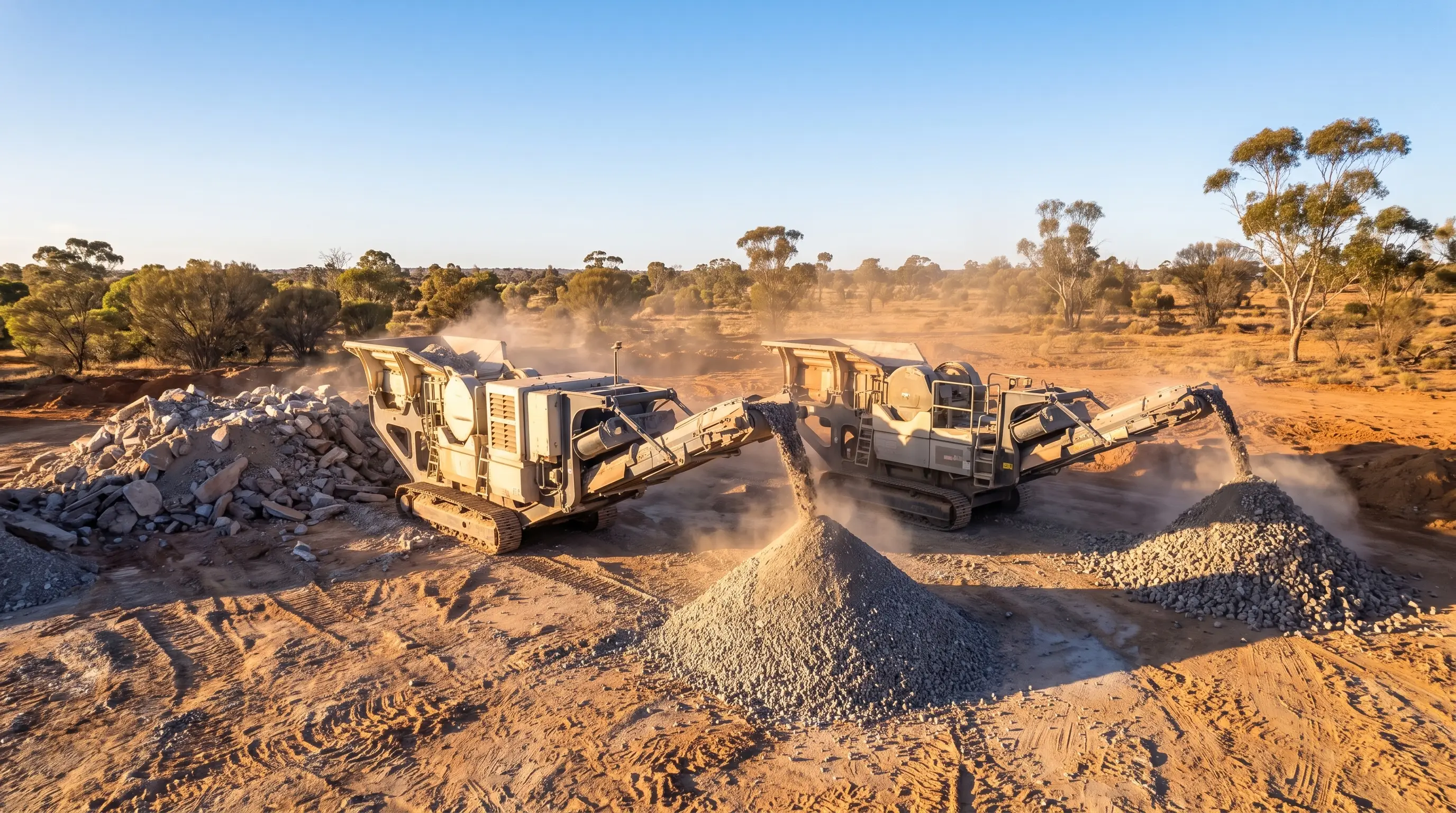
The crushers that produce this material range from compact units for tight urban sites up to high-throughput machines for demolition-scale output. Running one on site means you crush the concrete where it falls, skip the cartage, and lay the base the same day.
Environmental Benefits of Concrete Recycling
The environmental case for RCA is not a brochure talking point. It is measured in tonnes diverted and emissions avoided.
Recycling one tonne of concrete reduces 20 kilograms of greenhouse gases (CO2e) and prevents around 19 wheelie bins of concrete from going to landfill. Those are per-tonne figures. Multiply by a single demolition project producing 500 tonnes of concrete, and you have avoided 10 tonnes of CO2e and kept the equivalent of 9,500 wheelie bins out of landfill. The numbers compound fast.
The broader picture is encouraging. Around 78% of Australian construction and demolition waste is recycled or repurposed, based on 2020-21 figures. That puts Australia’s C&D sector ahead of most industries on recovery, but the gap between 78% and full recovery represents millions of tonnes still going to landfill each year. Every crushed slab that becomes road base instead of tip fill closes that gap a little further.
On-site crushing amplifies the environmental benefit. When you process concrete at the demolition site, you eliminate the round-trip haulage to a landfill or recycling yard. Fewer truck movements mean lower diesel use, less road wear, and reduced congestion on urban sites. The recycled aggregate is used as soon as it is processed.
The Scale of Australia’s Construction Waste
Construction is Australia’s single largest source of waste, contributing 39% of total output. That is not a rounding error in the national waste ledger. It is the single biggest category, and concrete makes up a large share of it.
The volume is not shrinking. Development continues across the eastern states, infrastructure renewal accelerates, and the built stock of mid-century concrete structures reaches the end of its design life. Every one of those demolitions produces material that either becomes a disposal cost or a reusable product. The choice is determined by whether a crusher is on site.
A mobile crusher turns the arithmetic around. Instead of paying tip fees to bury concrete and then buying crushed rock to fill the hole, you produce graded aggregate from the demolition material already on your site. The waste becomes stock. The cost centre becomes a material source. The 39% figure is not just a problem to manage. It is the size of the opportunity.