Most jaw crusher maintenance guides are written for quarries with a fitter on the payroll. You show up with a mobile crusher, a loader, and yourself. If the machine stops, production stops. Ten to twenty minutes each morning, done consistently, keeps you crushing and keeps the phone in your pocket.
Daily Checks You Can Do in 10 to 20 Minutes
A daily walk-around is the difference between catching a loose bolt and replacing a cracked frame. A daily walk-around can be done in 10 to 20 minutes before startup, with a few extra minutes at the end of shift to clear debris.
Jaw dies and cheek plates. Walk up to the chamber and look at the jaw dies. Check that the corrugations still have grip. Check the cheek plates for excessive wear that could expose the mainframe. Check the bolts. Vibration loosens fasteners; a bolt that backed out half a turn yesterday will be gone by Friday.
Fluid levels. Engine oil, hydraulic fluid, coolant, fuel. Check them against the manufacturer’s specs. Top off low fluids before startup using the specified grade, not whatever drum is closest.
Hydraulic system. Scan fittings, hoses, and cylinders for leaks. A drip at the fitting becomes a stream under operating pressure. Catch it cold.
Safety systems. Test that emergency stops work, guards are in place, and warning systems are functional. If a safety system is disabled, the machine does not run.
Feed material. Look at what you plan to crush today. Oversized material, tramp steel, or the wrong material type shortens jaw die life and risks a blockage. Five seconds scanning the pile saves an hour clearing the chamber.
End of shift. Clear dust and debris from radiator fins and the engine bay. Clogged radiators cause overheating, and overheating is one of the fastest ways to cook an engine.
Feed Size: The 80% Rule That Prevents Most Trouble
The single biggest cause of jaw crusher damage is feeding material too large for the opening. A blocked chamber, a snapped toggle plate, premature jaw die wear — nearly all of it traces back to what went into the hopper.
The rule is simple: the maximum feed size should be 80% of the crusher opening. A crusher with a 30-inch opening gets a 24-inch top size. A crusher with a 21-inch opening gets roughly 17 inches.
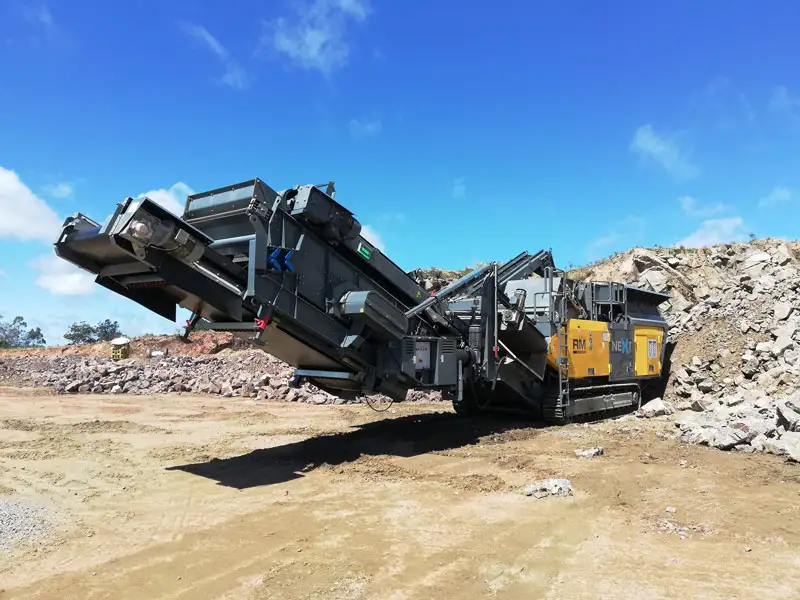
Komplet specs one of their tracked jaw crushers at a 31-inch by 21-inch jaw opening with a recommended maximum feed of approximately 18 inches and a production capacity of up to 160 US tons per hour. That 18-inch limit is not a suggestion. Push a 22-inch boulder into a 21-inch opening and you get bridging, a stalled crusher, and a morning spent with a pry bar, or worse, a snapped toggle plate.
If you run a smaller machine, the rule scales down. Match the feed to the opening on whichever unit you are running. The full range is at the jawscrushers.com.au crushers page.
When in doubt, size the rock before it hits the hopper. A hydraulic hammer on oversize material costs ten minutes. Clearing a bridged crusher costs the rest of the day.
What Breaks First and What a Solo Operator Can Fix
Some problems you handle with a grease gun and a spanner. Others need a fitter. Knowing which is which is the skill that keeps mobile operators in business.
Worn jaw plates. The corrugations on the dies wear flat over time. When the teeth lose their grip, throughput drops and product shape degrades. You will see the output getting larger and flakier. Low production output from a jaw crusher is commonly caused by worn jaw plates, incorrect closed side setting, insufficient feed, or material bridging. Rotating or flipping the plates when they are partially worn can extend their service life. Replacing plates is operator-level work — heavy, but within reach if you have lifting equipment and the manual.
Overheating bearings. Bearings generally need lubrication once a week or every 40 to 50 operating hours. A rising temperature is often an early sign of trouble — usually low grease, contaminated grease, or over-greasing. Check the fittings, purge and re-lubricate to spec. If the temperature does not settle within the hour, shut down and call someone. A seized bearing is an expensive repair and you cannot do it with hand tools.
Excessive vibration. Loose foundation bolts, unbalanced flywheels, or a severely worn eccentric shaft are the usual causes. The first one you fix with a torque wrench. The second needs a specialist to balance. The third means the crusher is eating itself. If tightening the bolts does not settle it, stop and call a fitter.
Toggle plate snapping. The toggle plate is a mechanical safety fuse. When an uncrushable object like an excavator tooth enters the chamber, the plate is engineered to snap and protect the frame and pitman. A snapped toggle plate from a routine tramp-metal event is a normal outcome — carry a spare and swap it. If the toggle plate snaps repeatedly under normal feed, something else is wrong. Check for tramp metal in the feed and verify the closed side setting is not too tight for the material.
When to Call a Fitter
There is a line between maintenance and repair. Cross it without knowing and you turn a parts bill into a machine replacement.
Cracked frame or structural welds. If you find a crack in the main frame, stop. Welding cast steel requires a certified metallurgist or an OEM technician. A field weld done wrong alters the steel temper and can lead to catastrophic failure under load.
Seized bearings. A bearing that has locked up needs more than a re-grease. The shaft may be scored, the housing may be damaged. This is specialist work.
Repeated toggle plate failure. One snapped toggle plate from tramp metal is normal. Three in a week is not. A fitter will check the closed side setting, the feed material, and whether there is hidden damage from a prior overload event.
Structural damage from a blockage. Clearing a bridged crusher with bars and hammers should only be attempted after the crusher is shut off and isolated. If the blockage required force to clear, inspect the frame, the pitman, and the toggle seats before restarting. If anything looks bent, cracked, or deformed, call a fitter.
jawscrushers.com.au supplies and commissions Rubble Master and Komplet crushers across Australia and backs every machine with parts, in-field service, and application support. When a problem is beyond what you can fix on site, having a dealer who carries spares and knows the machine shortens the downtime from weeks to days.
Safety Rules That Keep You Breathing
Mobile crushers can and have killed people. A day’s production is not worth a life. Follow these rules every time.
Lock out and isolate before any chamber work. The crusher must be shut off and the energy source isolated before you enter, reach in, or use bars and hammers. A stalled crusher can release stored energy without warning.
Never clear a blockage while the machine is running. Bridged rock, tramp metal, a jammed chamber — stop the feed, shut the crusher down, isolate it, and only then approach. Use a hydraulic hammer or pick attachment from an excavator where possible. If you must use hand tools, wear a harness and work from a position where moving material cannot trap or crush you.
Know the common injuries. Slips, trips, and falls from spillage around the machine. Projectile rock ejected from the chamber. Bridged rock that shifts without warning. Maintenance injuries from working on components under tension. Most are preventable with good housekeeping, PPE, and lock-out discipline.
Spend five minutes clearing spillage at the end of each shift. It is not just tidy. It removes the tripping hazard that puts you on the ground next to a running machine.
Building a Maintenance Rhythm That Sticks
Checklists fail when they are too ambitious. A solo operator cannot run a quarry maintenance programme. What works is a rhythm simple enough to survive a busy week.
Daily: Visual check of the toggle plate and operating temperatures. Walk-around inspection of jaw dies, bolts, fluids, hydraulics, and safety systems. Clear debris from radiators and the engine bay. Ten to twenty minutes.
Weekly: Lubricate bearings, once a week or every 40 to 50 operating hours. Inspect belts and hoses for wear, cracking, and tension. Torque-check critical fasteners. Listen for unusual noise or vibration during operation.
Monthly: Audit high-wear parts — fixed and movable jaw plates, cheek plates, toggle seats. Check the closed side setting and calibrate if it has drifted. Inspect the frame for stress cracks.
Keep a log. Note what you did, what you replaced, and what you measured. A maintenance log is the single largest factor in resale value. It also tells you what is wearing faster than it should, which tells you what to adjust in your feed or your settings.
The payoff for this discipline is not abstract. Properly maintained crushers routinely achieve 10,000 operating hours or more of reliable service. The difference between a machine that hits that mark and one that fails early is rarely the build quality. It is whether someone walked around it each morning with a spanner and a checklist.