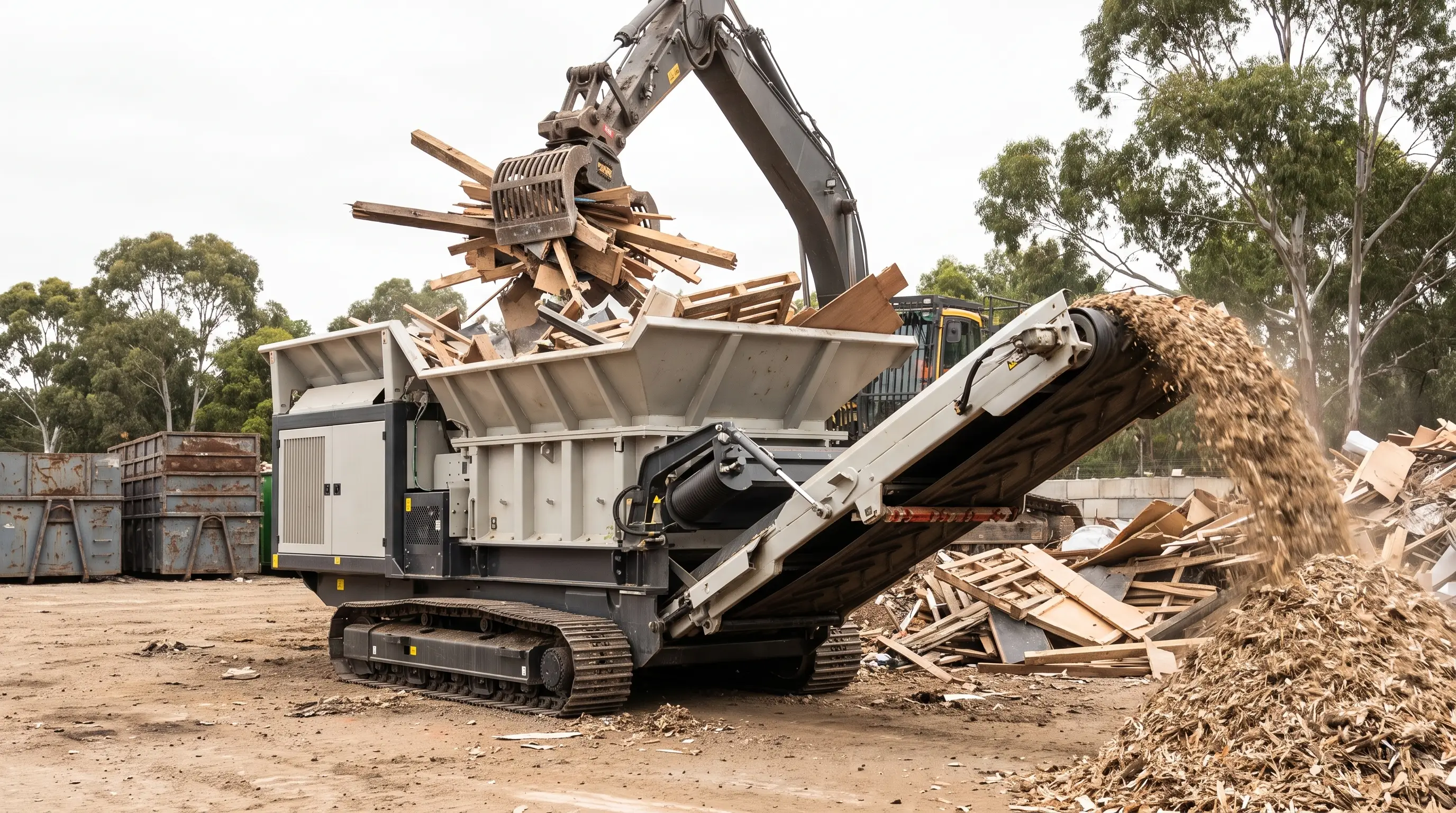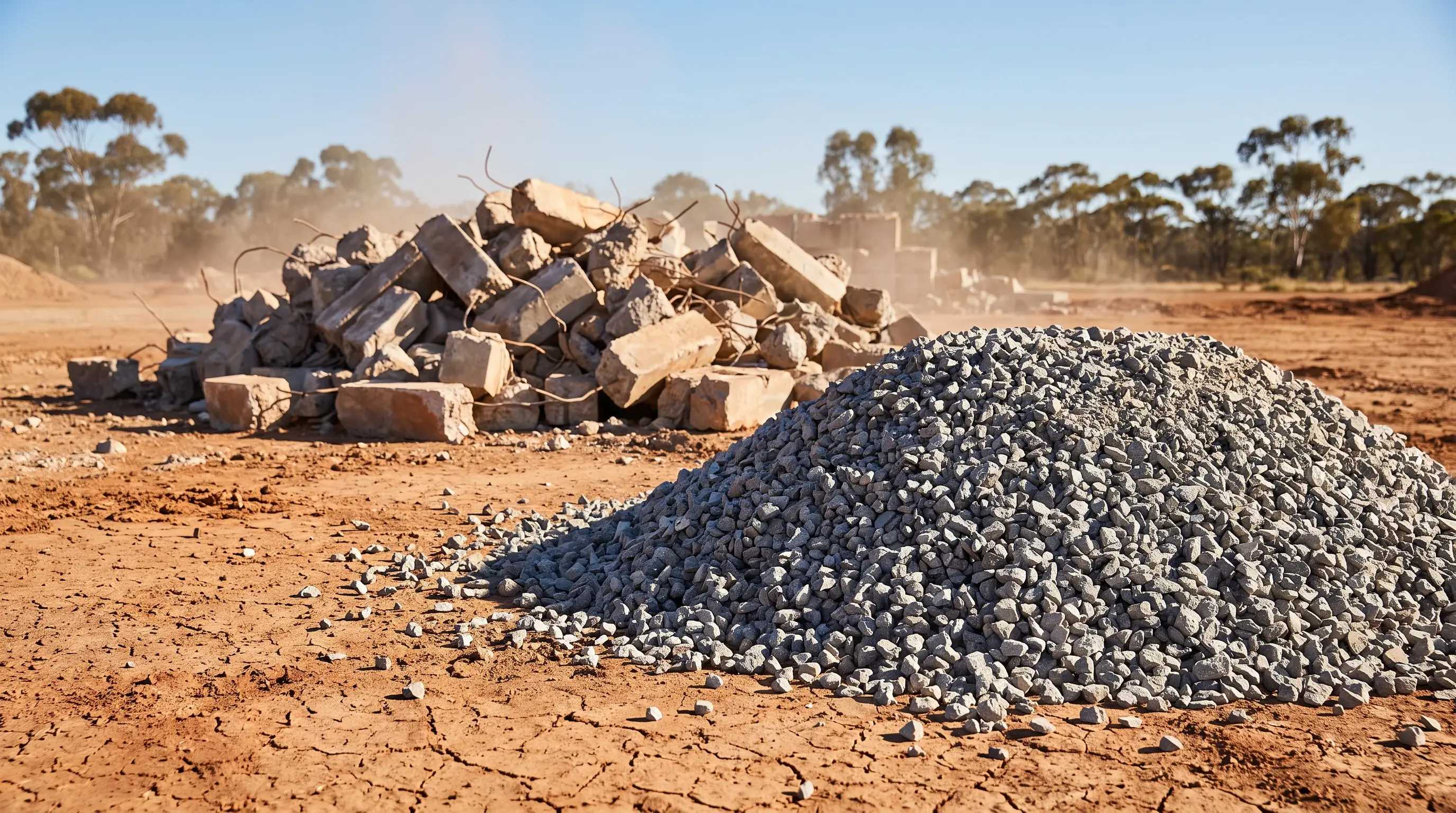
Watch a demolition crew drop a concrete slab and the real cost doesn’t show in the dust. It shows in the trucks. Every load you cart to landfill is a tip fee you paid to bury a material you already paid to pour, plus the cost of hauling in fresh aggregate for the next job. Concrete recycling, the use of rubble from demolished concrete structures, flips that arithmetic, and the numbers behind it keep getting bigger.
The Scale of Australia’s Construction Waste Problem
Construction is Australia’s single largest source of waste, contributing 39% of total output. In 2020-21 the country generated 75.8 million tonnes of waste, and 29 million tonnes of that came from construction and demolition. The stream is not shrinking. Between 2016 and 2021 it grew from 23.4 to 29 million tonnes, making up 38% of everything the country throws away. Federal building guidance puts construction and demolition at about 44% of total waste, around 27 million tonnes a year.
The recovery story is mixed. Australia’s resource recovery rate for 2020-21 sat at 63%, with a recycling rate of 60%. South Australia led every state and territory at 80%. The gap between what gets generated and what gets recovered is the opportunity. Back in 2008-09 Australia produced 19.0 million tonnes of C&D waste and recovered 55% of it. Waste volumes have outpaced every gain in recycling since.
How Concrete Recycling Works: From Rubble to Aggregate
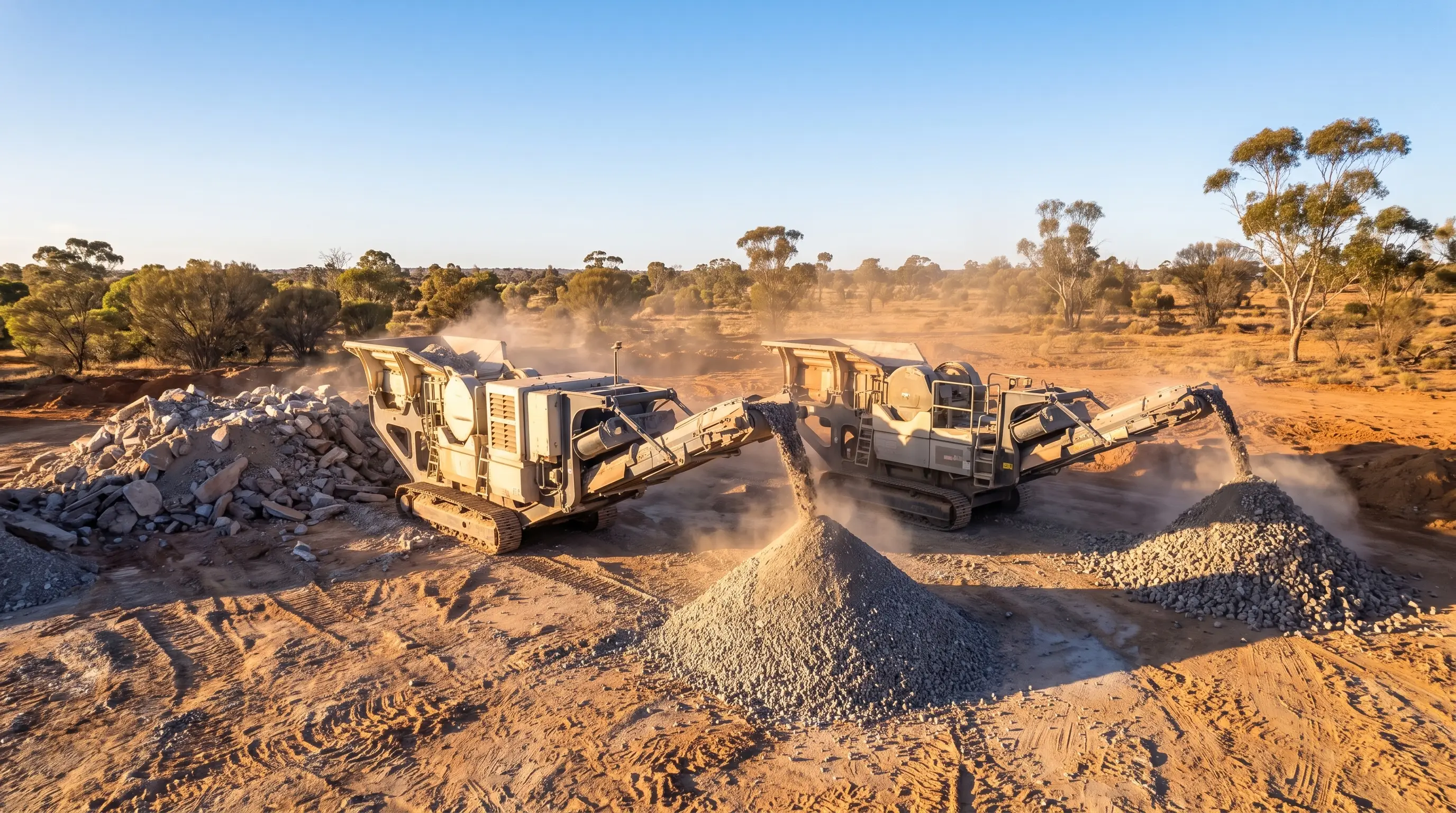
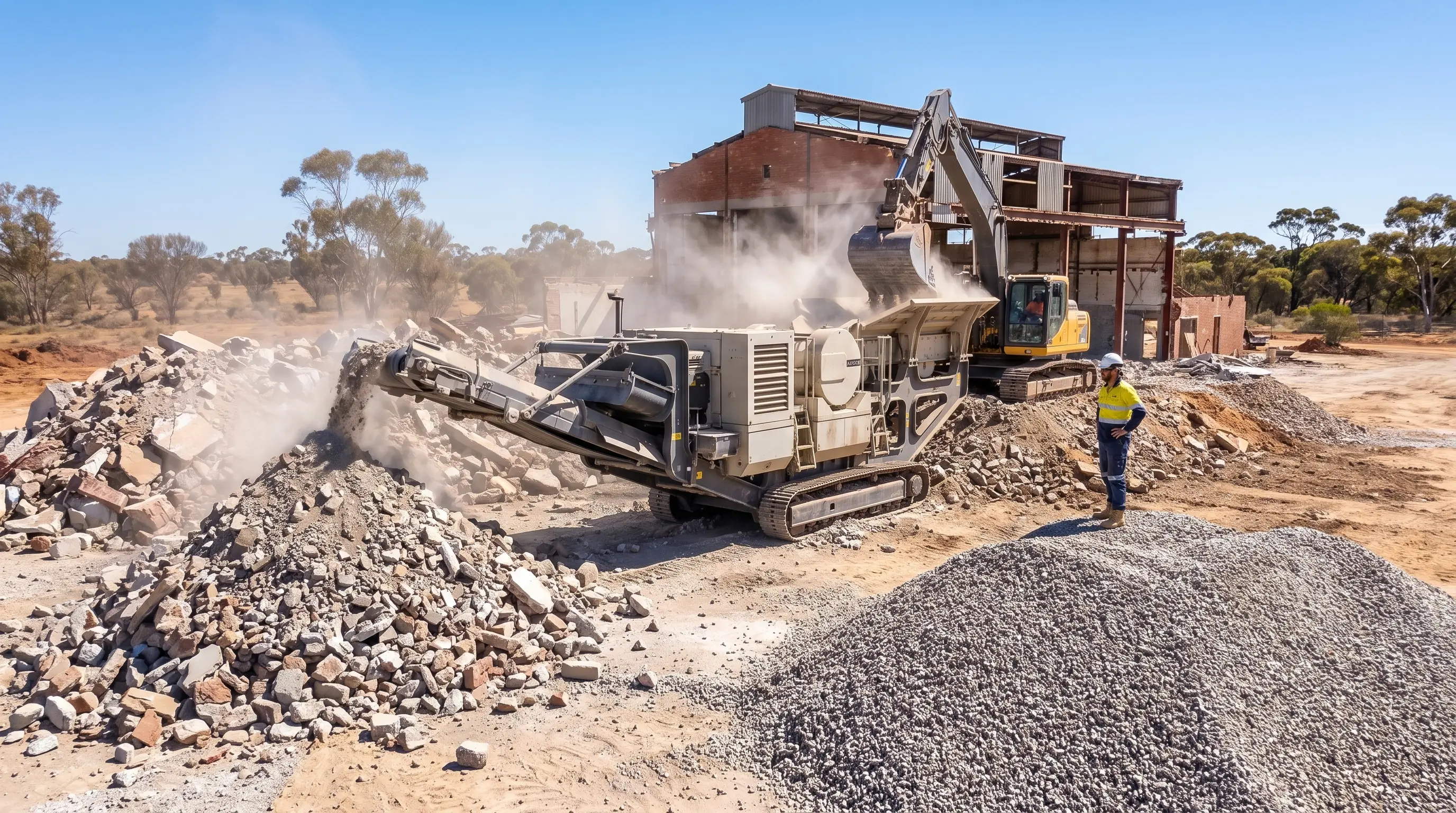
The most common way to recycle dry, hardened concrete is to crush it. The process starts with a jaw crusher breaking slabs into smaller pieces, then an impact crusher taking the material down into finer aggregate. A screen sorts the output into graded sizes and pulls out dirt and fine material, while a magnet lifts out the rebar so it can be recycled separately.
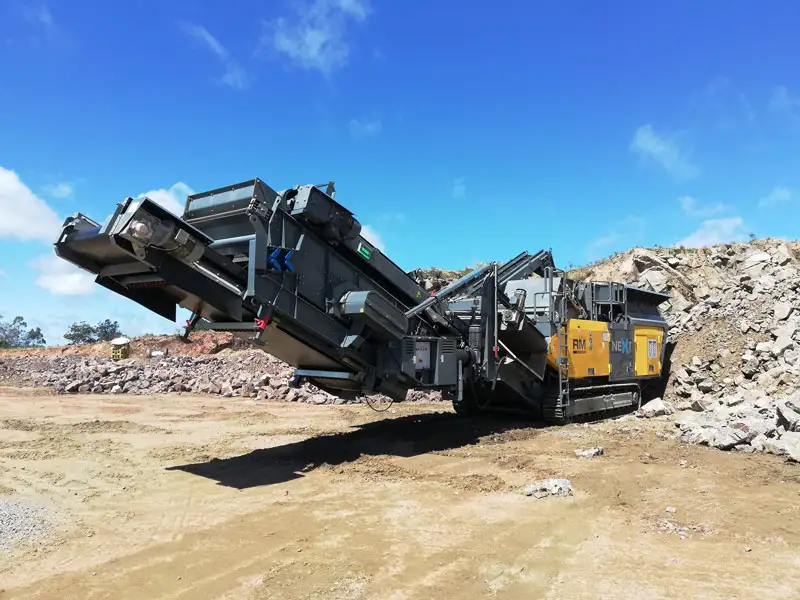
The order matters. Strip the trash, wood and paper first. Pull the steel with a magnet, sort what’s left by size, then run it through the crusher. Crushing on site with a portable machine beats hauling the material to a quarry and back, because you skip the trucking in both directions. That is where jawscrushers.com.au comes in. The Rubble Master and Komplet crushers it supplies are built for this exact job, turning a pile of demolition concrete into graded aggregate on the job site rather than in a yard. If you would rather not buy, hiring a crusher gets you the same loop for short runs.
What Is Recycled Concrete Aggregate (RCA)?
Crush concrete and what comes out the other end is recycled concrete aggregate, or RCA. It behaves differently from virgin rock. RCA has an angular shape and a rougher surface, a specific gravity about 20% lower than natural aggregate, higher water absorption, and a pH above 11.
| Property | Value |
|---|---|
| Shape | Angular, rougher surface |
| Specific gravity | About 20% lower than natural aggregate |
| Water absorption | Higher |
| pH | Greater than 11 |
| Yield | Up to 15% more volume by weight |
Those properties mostly work in your favour. The lower density means RCA yields more volume by weight, up to 15% more, which usually lowers job cost. The trade-off shows up in mix design: because RCA already contains cement, the ratios of a new concrete mix need adjusting for workability, strength and water absorption. For road base and sub-base, the angular, well-compacting nature of RCA is exactly what you want.
Where Recycled Concrete Goes
Crushed rubble lands in more places than most contractors assume. It can be used for road gravel, revetments, retaining walls, landscaping gravel, or raw material for new concrete. The same material can also go straight back into new concrete as aggregate, saving virgin resources.
Most recovered concrete today ends up under roads as sub-base and in civil works. The higher-value loop is closing too. Sika’s patented reCO2ver process breaks concrete fragments back into fine powder, sand and aggregates, returning them to the production chain. That is the difference between downcycling concrete into fill and actually recycling it into new concrete.
The Business Case for Concrete Recycling
Recycling concrete pays. Every week, contractors make thousands of dollars recycling and repurposing concrete. You stop paying tip fees and trucking to bury a material, and you gain a graded product you can use or sell. It is a real industry here: an estimated 50,000 people work directly in waste-related roles in Australia, including concrete recycling.
The volume only moves one way. Australia generated about 26.8 million tonnes of C&D waste in 2022-23. Every tonne is either a cost to bury or feed stock for a crusher. The contractors who run the second option win the job on price and keep the margin. See the industries we support.
A Brief History of Concrete in Australia
The rubble behind a demolition has a long backstory. Cement manufacture in Australia began near Melbourne in 1862. Between 1895 and 1920, most concrete reinforcement systems were imported into the country. A century and a half of pouring has left Australia with an enormous built stock, and every demolition day converts a slice of it back into raw material.
That is the loop the whole article points at. Concrete recycling is where Australia’s oldest building material meets its newest business case, and the machine doing the work is a crusher.